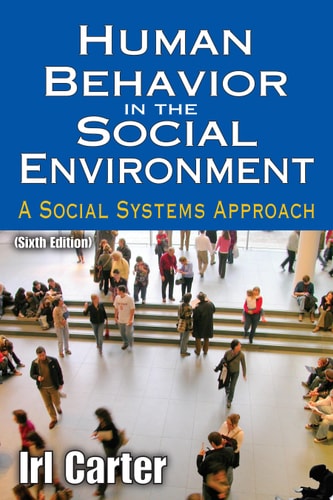
Human Behavior in the Social Environment: A Social Systems Approach
0
0
As an Amazon Associate and affiliate partner, Menrva Books earns from qualifying purchases. Learn more
Author Description
Since the publication of the first edition of Human Behavior in the Social Environment, several generations of students have successfully used this classic text, which takes a social systems approach to human behavior. This systems approach is still widely accepted in the human services disciplines, including social work, education, nursing, psychology, and in human services programs themselves. Its ideas have become the organizing framework for curriculum, as well as fruitful sources for new applications of theory and practice. Among the advantages of the social systems approach is that it permits students and practitioners to see connections between fields of practice, between methods, and across professional disciplines and bodies of theory.The book serves as a template of the concentric circles of human behavior, with chapters on fields of behavior, beginning with the person and ranging outward to culture and society. Abundant examples from practice and from behavioral patterns are drawn from the social sciences, topical events, literature, and the authors' personal and professional experiences. This volume responds to the needs of students and instructors as these have developed since the publication of the previous edition.
Menrva's Summary
THE THESIS
How can a social systems framework effectively integrate the diverse factors influencing human behavior across individual, cultural, and societal levels? Irl Carter utilizes his extensive background in social work education to present a comprehensive model for understanding human behavior. By applying systems theory, the text provides a structured methodology for practitioners to analyze the interconnectedness of personal development, environmental influences, and professional practice. The book serves as a foundational academic resource for students and professionals in the human services sector.
THE SCOPE MAP
What You Will Find
- A concentric circle model of human behavior ranging from the individual to the societal level
- Theoretical applications for social work, nursing, and psychology curricula
- Case studies and behavioral patterns drawn from social sciences and literature
- Methodologies for identifying connections between disparate fields of practice
THE AUTHORITY PERSPECTIVE
Experts and educators recognize this text as a foundational volume for teaching systems theory within the human services disciplines. Readers frequently note the clarity of the concentric circle framework in helping students organize complex behavioral data into actionable practice.
Page Count:
306
Publication Date:
2011-04-30
Publisher:
Routledge
ISBN-10:
0202364003
ISBN-13:
9780202364001
Psychology
Academic
Human services
Social Work
Education
Social systems
Sociology