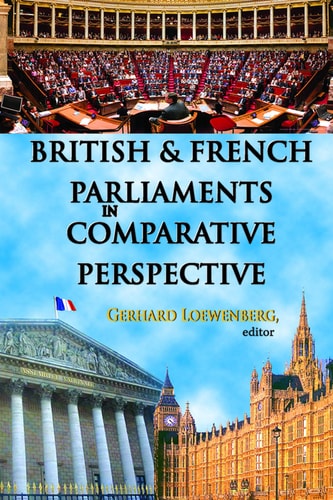
British and French Parliaments in Comparative Perspective
0
0
As an Amazon Associate and affiliate partner, Menrva Books earns from qualifying purchases. Learn more
Author Description
The representative assembly, or parliament, as it is most widely called, is at once an old, a ubiquitous, and a controversial political institution. In this century it has attracted the criticism of both disillusioned democrats and true believers in the superior representatives of mass movements or of charismatic leaders. Even among its supporters the institution is constantly the object of reform. This book deals with parliament (the generic term for what also may be known as legislature, congress, assembly, diet, or knesset), what it has been and is, what it does and should do, and what may become of it.In a wide-ranging and excellently organized introductory essay, Loewenberg defines the parliamentary institution and discusses its role in modern times. He points out that since its appearance in the Middle Ages, the parliamentary system has been adopted by almost every country, including in recent years the newly independent nations of Africa and the Middle East. This essay is followed by differing and often contradictory views, by American and European scholars, of the role of a parliament. Issues are defined in the form of examinations of specific parliamentary bodies, such as the House of Commons, the Bundestag, the French Parliament under the Fifth Republic, and the Indian Parliament.Writing from the perspective of different national experiences, the contributors display varied perceptions and expectations of the institution, noting those that sustain it even while they make it controversial. Intended primarily as provocative reading for students of comparative government and comparative political institutions; this book illuminates "one of the most enduring and widely applicable inventions of political man, thus making it also a valuable work for scholars as well as practitioners of the political and party process.
Menrva's Summary
THE THESIS
This work investigates the functional evolution, contemporary relevance, and inherent controversies surrounding the parliamentary institution as a global political model. Gerhard Loewenberg, a scholar of comparative government, compiles a series of essays that analyze the legislature's role in modern democracy. By contrasting the historical development of parliaments with their current applications in diverse nations, the text examines the tension between the institution's traditional structure and the demands for reform in the modern era.
THE SCOPE MAP
What You Will Find
- Comparative analysis of the British House of Commons, the German Bundestag, the French Parliament under the Fifth Republic, and the Indian Parliament.
- Theoretical frameworks defining the role of representative assemblies from the Middle Ages to the present.
- A collection of diverse scholarly perspectives from both American and European political scientists.
- Examinations of the parliamentary system's adoption in newly independent nations across Africa and the Middle East.
THE AUTHORITY PERSPECTIVE
Experts recognize this volume as a foundational text for students of comparative government due to its structured approach to institutional analysis. Readers frequently note the academic density of the prose, which serves as a rigorous introduction to the complexities of the legislative process.
Page Count:
190
Publication Date:
2010-05-15
Publisher:
Routledge
ISBN-10:
0202363600
ISBN-13:
9780202363608
History
Representative government and representation
Government
Legislative Studies
Comparative Politics
Great Britain
Community Tags
Other Editions(6)


Similar Books





Reader Comments
Share Your Thoughts
No comments yet. Be the first to share your thoughts!