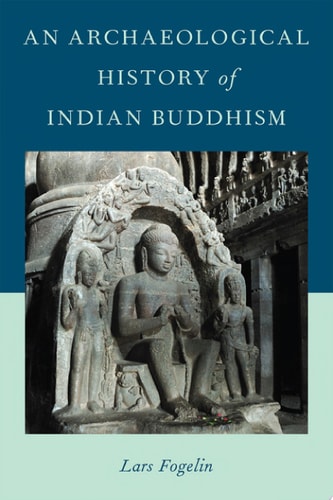
An Archaeological History of Indian Buddhism
0
0
As an Amazon Associate and affiliate partner, Menrva Books earns from qualifying purchases. Learn more
Author Description
An Archaeological History of Indian Buddhism is a comprehensive survey of Indian Buddhism from its origins in the 6th century BCE, through its ascendance in the 1st millennium CE, and its eventual decline in mainland South Asia by the mid-2nd millennium CE. Weaving together studies of archaeological remains, architecture, iconography, inscriptions, and Buddhist historical sources, this book uncovers the quotidian concerns and practices of Buddhist monks and nuns (the sangha), and their lay adherents--concerns and practices often obscured in studies of Buddhism premised largely, if not exclusively, on Buddhist texts. At the heart of Indian Buddhism lies a persistent social contradiction between the desire for individual asceticism versus the need to maintain a coherent community of Buddhists. Before the early 1st millennium CE, the sangha relied heavily on the patronage of kings, guilds, and ordinary Buddhists to support themselves. During this period, the sangha emphasized the communal elements of Buddhism as they sought to establish themselves as the leaders of a coherent religious order. By the mid-1st millennium CE, Buddhist monasteries had become powerful political and economic institutions with extensive landholdings and wealth. This new economic self-sufficiency allowed the sangha to limit their day-to-day interaction with the laity and begin to more fully satisfy their ascetic desires for the first time. This withdrawal from regular interaction with the laity led to the collapse of Buddhism in India in the early-to-mid 2nd millennium CE. In contrast to the ever-changing religious practices of the Buddhist sangha, the Buddhist laity were more conservative--maintaining their religious practices for almost two millennia, even as they nominally shifted their allegiances to rival religious orders. This book also serves as an exemplar for the archaeological study of long-term religious change through the perspectives of practice theory, materiality, and semiotics.
Menrva's Summary
THE THESIS
This book investigates the historical trajectory of Indian Buddhism by prioritizing archaeological evidence over traditional textual sources to explain the religion's rise and eventual decline. Lars Fogelin, an expert in the archaeology of religion, utilizes material culture—including architecture, inscriptions, and iconography—to reconstruct the daily lives of monastics and lay practitioners. He argues that a fundamental social tension between individual asceticism and the necessity of communal support dictated the economic and political evolution of the sangha over two millennia.
THE SCOPE MAP
What You Will Find
- A chronological survey of Indian Buddhism from the 6th century BCE to the mid-2nd millennium CE.
- An application of practice theory, materiality, and semiotics to religious history.
- Analysis of the shifting economic relationship between monasteries and lay patrons.
Scope Limits
- The text focuses primarily on mainland South Asia and does not provide an exhaustive global history of Buddhist expansion.
- It intentionally minimizes reliance on canonical Buddhist texts in favor of physical archaeological data.
THE AUTHORITY PERSPECTIVE
Scholars and students of religious studies frequently cite this work as a significant methodological shift in how Buddhist history is interpreted through material remains. Readers note the academic density of the prose, which serves as a rigorous resource for those interested in the intersection of archaeology and religious practice.
Page Count:
264
Publication Date:
2015-01-01
Publisher:
Oxford University Press
ISBN-10:
0190266929
ISBN-13:
9780190266929
Religion
History
Anthropology
Buddhism india
Buddhism
Archaeology
Asian Studies
Community Tags
Other Editions(2)
Similar Books





Reader Comments
Share Your Thoughts
No comments yet. Be the first to share your thoughts!