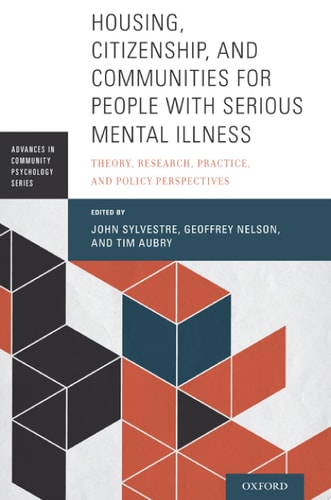
Housing, Citizenship, and Communities for People with Serious Mental Illness: Theory, Research, Practice, and Policy Perspectives
0
0
As an Amazon Associate and affiliate partner, Menrva Books earns from qualifying purchases. Learn more
Author Description
Housing has emerged as a popular and central topic of research, mental health system development, and social and mental health policy in recent years. The field has rapidly evolved in a number of ways: first, with the introduction and popularization of the Housing First approach; second, there are now a growing number of randomized controlled studies to evaluate the lives of people living in this housing; and third, there is increasing recognition of housing as a cornerstone of mental health policy and community mental health systems.Housing, Citizenship, and Communities for People with Serious Mental Illness provides the first comprehensive overview of the field. The book covers theory, research, practice, and policy issues related to the provision of housing and the supports that people rely on to get and keep their housing. A special focus is given to issues of citizenship and community life as key outcomes for people with serious mental illness who live in community housing. The book is grounded in the values, research traditions, and conceptual tools of community psychology. This provides a unique lens through which to view the field. It emphasizes housing not only as a component of community mental health systems but also as an instrument for promoting citizenship, social inclusion, social justice, and the empowerment of marginalized people. It serves as a resource for researchers, practitioners, and policy-makers looking for up-to-date reviews and perspectives on this field, as well as a sourcebook for current and future research and practice trends.
Menrva's Summary
THE THESIS
This book investigates the intersection of housing stability, citizenship, and community integration for individuals living with serious mental illness. Authors Geoffrey Brian Nelson, John Sylvestre, and Tim Aubry utilize the framework of community psychology to analyze how housing serves as a foundational element for social inclusion and empowerment. By synthesizing current research, policy developments, and clinical practices, the authors argue that housing must be viewed as a mechanism for social justice rather than merely a component of mental health service delivery.
THE SCOPE MAP
What You Will Find
- Analysis of the Housing First approach and its impact on mental health outcomes.
- Theoretical foundations of community psychology applied to housing policy.
- Review of randomized controlled studies evaluating housing interventions.
- Examination of citizenship and social inclusion as primary metrics for success.
Scope Limits
- The text focuses primarily on Western-centric mental health systems and policy frameworks.
- It does not provide a clinical guide for individual psychiatric treatment or medication management.
THE AUTHORITY PERSPECTIVE
Experts recognize this work as a comprehensive synthesis of the current state of housing policy for marginalized populations. Readers frequently note the academic density of the prose, making it a valuable resource for researchers and policy-makers in the field of community mental health.
Page Count:
424
Publication Date:
2017-01-01
Publisher:
Oxford University Press
ISBN-10:
0190265620
ISBN-13:
9780190265625
Psychology
Mental Health
Social Science
Introduction to Social WorkWelfare
Community Psychology
Sociology
Public Policy
Community Tags
Similar Books