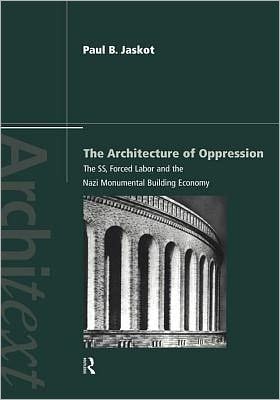
The Architecture of Oppression
0
0
As an Amazon Associate and affiliate partner, Menrva Books earns from qualifying purchases. Learn more
Author Description
This book re-evaluates the architectural history of Nazi Germany and looks at the development of the forced-labour concentration camp system. Through an analysis of such major Nazi building projects as the Nuremberg Party Rally Grounds and the rebuilding of Berlin, Jaskot ties together the development of the German building economy, state architectural goals and the rise of the SS as a political and economic force. As a result, The Architecture of Oppression contributes to our understanding of the conjunction of culture and politics in the Nazi period as well as the agency of architects and SS administrators in enabling this process.
Menrva's Summary
THE THESIS
This book investigates the intersection of architectural development, state-sponsored forced labor, and the economic expansion of the SS in Nazi Germany. Paul B. Jaskot, a scholar of art and architectural history, utilizes primary source documentation and economic data to argue that Nazi building projects were not merely aesthetic endeavors but were central to the regime's political and economic consolidation. By examining the construction of the Nuremberg Party Rally Grounds and the planned reconstruction of Berlin, Jaskot demonstrates how the Nazi state integrated architectural goals with the brutal realities of the concentration camp system. The work provides a structural analysis of how architects and SS administrators functioned as active agents in the implementation of state policy.
THE SCOPE MAP
What You Will Find
- Analysis of major Nazi construction projects including the Nuremberg Party Rally Grounds and Berlin urban planning.
- Examination of the German building economy and its reliance on forced labor from concentration camps.
- Investigation into the rise of the SS as a dominant political and economic entity through industrial control.
- Evaluation of the agency and complicity of architects and administrators in the Nazi regime.
THE AUTHORITY PERSPECTIVE
Scholars and historians frequently cite this work as a critical examination of the material and economic foundations of Nazi power. The text is noted for its rigorous academic approach and its ability to link architectural history with the broader history of the Holocaust and state-sponsored violence.
Page Count:
0
Publication Date:
2004-01-01
Publisher:
Taylor & Francis Inc
ISBN-10:
0203030257
ISBN-13:
9780203030257
Architecture
History
Forced Labor
Travail forcé
Nonfiction
National Socialism
Germany
Nazi Germany