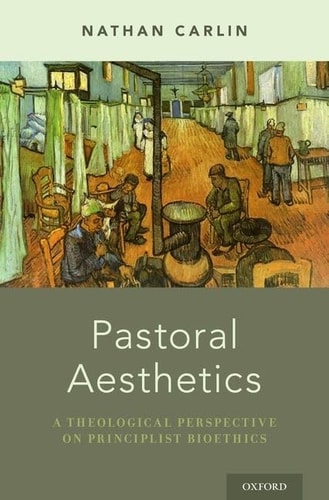
Pastoral Aesthetics: A Theological Perspective on Principlist Bioethics
0
0
As an Amazon Associate and affiliate partner, Menrva Books earns from qualifying purchases. Learn more
Author Description
It is often said that bioethics emerged from theology in the 1960s, and that since then it has grown into a secular enterprise, yielding to other disciplines and professions such as philosophy and law. During the 1970s and 1980s, a kind of secularism in biomedicine and related areas was encouraged by the need for a neutral language that could provide common ground for guiding clinical practice and research protocols. Tom Beauchamp and James Childress, in their pivotal The Principles of Biomedical Ethics, achieved this neutrality through an approach that came to be known as "principlist bioethics."In Pastoral Aesthetics, Nathan Carlin critically engages Beauchamp and Childress by revisiting the role of religion in bioethics and argues that pastoral theologians can enrich moral imagination in bioethics by cultivating an aesthetic sensibility that is theologically-informed, psychologically-sophisticated, therapeutically-oriented, and experientially-grounded. To achieve these ends, Carlin employs Paul Tillich's method of correlation by positioning four principles of bioethics with four images of pastoral care, drawing on a range of sources, including painting, fiction, memoir, poetry, journalism, cultural studies, clinical journals, classic cases in bioethics, and original pastoral care conversations. What emerges is a form of interdisciplinary inquiry that will be of special interest to bioethicists, theologians, and chaplains.
Menrva's Summary
THE THESIS
This work investigates whether pastoral theology can reintroduce moral imagination into the secular framework of principlist bioethics. Nathan Carlin, a scholar in the intersection of religion and medicine, critiques the neutrality established by Beauchamp and Childress. He argues that by integrating an aesthetic sensibility—informed by theology, psychology, and clinical experience—pastoral practitioners can provide a more nuanced approach to ethical dilemmas than secular principles alone allow.
THE SCOPE MAP
What You Will Find
- A correlation between the four principles of bioethics and four distinct images of pastoral care.
- An interdisciplinary methodology utilizing Paul Tillich's method of correlation.
- Analysis of diverse source materials including literature, clinical journals, and original pastoral care conversations.
Scope Limits
- The text does not provide a comprehensive history of secular bioethics.
- It does not offer a universal ethical code to replace existing clinical protocols.
THE AUTHORITY PERSPECTIVE
Experts in the field recognize this text as a significant contribution to the dialogue between clinical ethics and religious studies. Readers frequently note the academic density of the prose, which is best suited for scholars and practitioners familiar with both theological frameworks and bioethical principles.
Page Count:
216
Publication Date:
2019-04-04
Publisher:
Oxford University Press
ISBN-10:
0190270144
ISBN-13:
9780190270148
Religion
Philosophy
Medical Ethics
Bioethics
Theology
Pastoral theology
Medical
Pastoral care
Allied Health
Community Tags
Similar Books