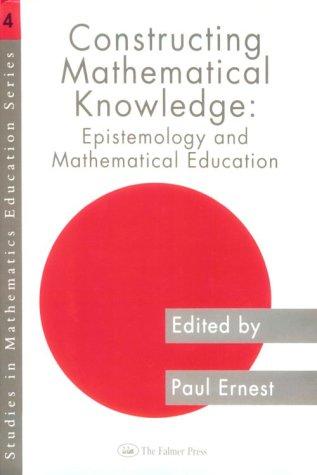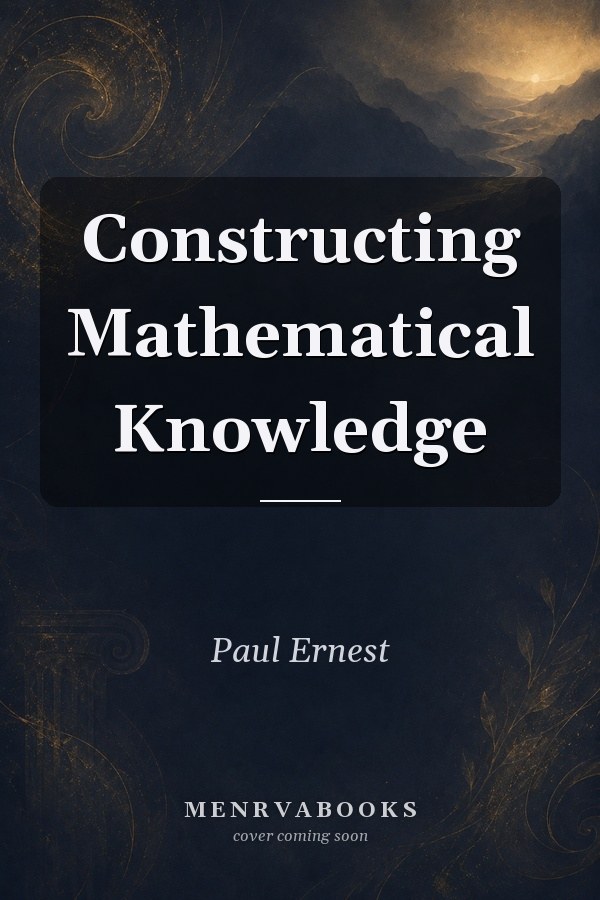
Constructing Mathematical Knowledge
0
0
As an Amazon Associate and affiliate partner, Menrva Books earns from qualifying purchases. Learn more
Author Description
No description available.
Menrva's Summary
THE THESIS
This work investigates the core question of how mathematical knowledge is constructed, validated, and transmitted within human society. Paul Ernest, a prominent philosopher of mathematics and education, utilizes a social constructivist framework to argue that mathematics is not a collection of objective, eternal truths discovered by individuals, but rather a product of social interaction and linguistic convention. He synthesizes historical, psychological, and sociological perspectives to demonstrate that mathematical concepts are contingent upon the cultural and institutional contexts in which they emerge.
THE SCOPE MAP
What You Will Find
- A social constructivist theory of mathematical knowledge and its development.
- Analysis of the relationship between language, culture, and mathematical abstraction.
- Examination of the role of social institutions in the validation of mathematical proofs.
- Theoretical frameworks for understanding how mathematical knowledge is taught and learned in educational settings.
THE AUTHORITY PERSPECTIVE
Experts in the philosophy of mathematics frequently cite this text as a foundational contribution to the social constructivist movement. Readers often note the academic density of the prose, which requires a strong background in both mathematical theory and philosophical discourse to fully appreciate the author's arguments.
Page Count:
304
Publication Date:
2012-01-01
Publisher:
Taylor & Francis Group
ISBN-10:
0203046366
ISBN-13:
9780203046364
Philosophy
Mathematics
Education
Epistemology
Sociology