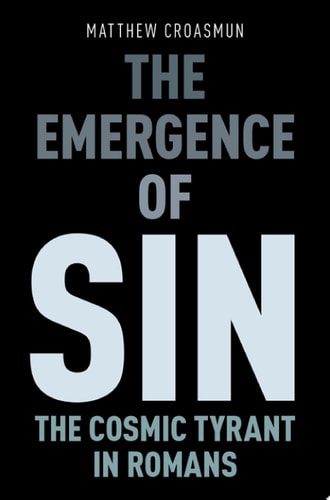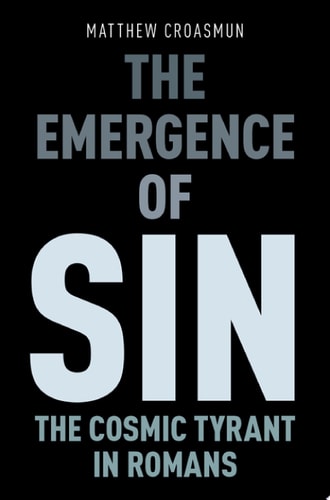
The Emergence of Sin
0
0
As an Amazon Associate and affiliate partner, Menrva Books earns from qualifying purchases. Learn more
Author Description
We Can Have A Sense That When We Try To Do Right By One Another, We Aren't Merely Striving Against Ourselves. The Feeling Is That We Are Struggling Against Something--someone-else. As If There's A Force-a Person- That Wishes Us Ill. In His Letter To The Romans, The Apostle Paul Describes Just Such A Person: Sin, A Cosmic Tyrant Who Constrains Our Moral Freedom, Confuses Our Moral Judgment, And Condemns Us To Slavery And To Death. Commentators Have Long Argued About Whether Paul Literally Means To Say Sin Is A Person Or Is Simply Indulging In Literary Personification, But Regardless Of Paul's Intentions, For Modern Readers It Would Seem Clear Enough: There Is No Such Thing As A Cosmic Tyrant. Surely It Is More Reasonable To Suppose Sin Is Merely A Colorful Way Of Describing Individual Misdeeds Or, At Most, A Way Of Evoking The Intractability Of Our Social Ills. In The Emergence Of Sin, Matthew Croasmun Suggests We Take Another Look. The Vision Of Sin He Offers Is At Once Scientific And Theological, Social And Individual, Corporeal And Mythological. He Argues Both That The Cosmic Power Sin Is Nothing More Than An Emergent Feature Of A Vast Human Network Of Transgression And That This Power Is Nevertheless Real, Personal, And One Whom We Had Better Be Ready To Resist. Ultimately, What Is On Offer Here Is An Account Of The World Re-mythologized At The Hands Of Chemists, Evolutionary Biologists, Sociologists, And Entomologists. In This World, Paul's Text Is Not A Relic Of A Forgotten Mythical Past, But A Field Manual For Modern Living.
Menrva's Summary
THE THESIS
Can the Pauline concept of Sin as a personal, cosmic tyrant be reconciled with a modern, scientific understanding of human behavior? Matthew Croasmun, a theologian and scholar, investigates this question by synthesizing biblical exegesis with insights from evolutionary biology, sociology, and chemistry. He proposes that Sin is an emergent phenomenon—a real, personal force arising from the collective network of human transgression—rather than merely a metaphor for individual moral failure.
THE SCOPE MAP
What You Will Find
- An analysis of the Apostle Paul's letter to the Romans regarding the personification of Sin.
- A framework for understanding emergent properties in complex social and biological systems.
- An interdisciplinary approach integrating theology with evolutionary biology and sociology.
Scope Limits
- The text does not provide a comprehensive historical survey of all theological interpretations of Sin.
- It does not offer a purely secular or scientific argument, as it remains grounded in Christian theological inquiry.
THE AUTHORITY PERSPECTIVE
Scholars and readers often note the ambitious nature of this work in bridging the gap between ancient theological texts and contemporary scientific discourse. The text is frequently cited for its unique attempt to re-mythologize theological concepts through the lens of modern social and biological sciences.
Page Count:
272
Publication Date:
2017-01-01
Publisher:
Oxford University Press
ISBN-10:
0190277998
ISBN-13:
9780190277994
Christian ethics
Philosophy of
Systematic Theology
Theology
Sociology of Religion
Community Tags
Similar Books