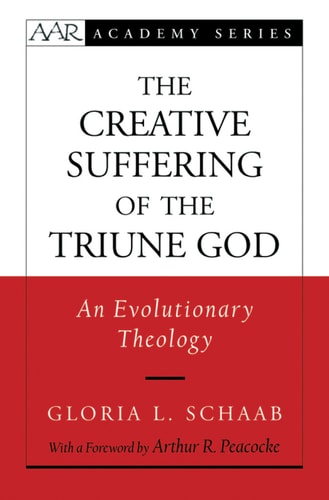
The Creative Suffering of the Triune God: An Evolutionary Theology
0
0
As an Amazon Associate and affiliate partner, Menrva Books earns from qualifying purchases. Learn more
Author Description
The global reality of suffering and death has always demanded an authentic theological response and impelled debate concerning Gods relationship to suffering, as well as the conceivability of the suffering of God. The scope and impact of this suffering in the last century have driven this debate to an acute pitch, demanding to know how one can speak rightly of God in view of the suffering that is inherent and inflicted in the cosmos. While in former ages, some looked to an omnipotent and impassible deus ex machina in answer to this question, many contemporary theologians have revised their understanding of God in relation to the world. With these theologians, Gloria Schaab proposes that a viable response to cosmic suffering is the recognition that the triune Christian God participates in the very sufferings of the cosmos itself. She sets her argument within theology and science dialogue and specifically within the work of scientist-theologian Arthur Peacocke. Informed by the understandings of evolutionary science, grounded within a panentheistic paradigm of the God-world relationship, and rooted within the Christian theological tradition, this work contends that the understanding of the Triune God as intimately involved with the suffering of the cosmos is viable and efficacious in view of the suffering of the cosmos and its creatures. It develops a female procreative model of the creative suffering of the Triune God, an ecological ethics based on the midwife model of care, and a pastoral model of threefold differentiation of suffering in God as steps toward Christian praxis in response to the mystery of God within the pain, suffering, and death of cosmic existence and human experience.
Menrva's Summary
THE THESIS
This work investigates how the Christian doctrine of the Trinity can be reconciled with the reality of cosmic suffering through an evolutionary and panentheistic framework. Gloria L. Schaab, a scholar in theology and science, utilizes the foundational work of Arthur Peacocke to argue that God is not an impassible deity but one who actively participates in the suffering of the cosmos. By integrating evolutionary biology with traditional Christian doctrine, she constructs a model of divine creative suffering that addresses the problem of evil and pain in an evolving universe.
THE SCOPE MAP
What You Will Find
- A panentheistic model of the God-world relationship
- A female procreative model of divine creative suffering
- An ecological ethics framework based on a midwife model of care
- A pastoral model for the differentiation of suffering in God
Scope Limits
- The text does not provide a comprehensive history of all theodicy throughout Christian tradition
- The analysis is specifically limited to the dialogue between evolutionary science and the work of Arthur Peacocke
THE AUTHORITY PERSPECTIVE
Scholars in the field of science and religion recognize this text as a significant contribution to the development of panentheistic theology. Readers frequently note the academic density of the prose, which requires a foundational understanding of both evolutionary theory and systematic theology to fully grasp the author's arguments.
Page Count:
253
Publication Date:
2007-01-01
Publisher:
Oxford University Press
ISBN-10:
0190450096
ISBN-13:
9780190450090
Religion
Theology doctrinal
Science and Religion
Evolutionary Theology
Christian ethics
Philosophy of
Theology
Trinity
Systematic Theology
Community Tags
Similar Books