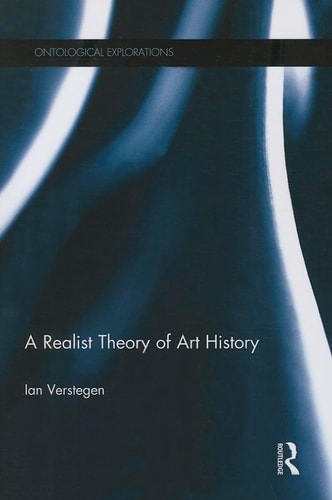
A Realist Theory of Art History
0
0
As an Amazon Associate and affiliate partner, Menrva Books earns from qualifying purchases. Learn more
Author Description
As the theoretical alignments within academia shift, this book introduces a surprising variety of realism to abolish the old positivist-theory dichotomy that has haunted Art History. Demanding frankly the referential detachment of the objects under study, the book proposes a stratified, multi-causal account of art history that addresses postmodern concerns while saving it from its errors of self-refutation. Building from the very basic distinction between intransitive being and transitive knowing, objects can be affirmed as real while our knowledge of them is held to be fallible. Several focused chapters address basic problems while introducing philosophical reflection into art history. These include basic ontological distinctions - society and culture, general and 'special' history, the discontinuity of cultural objects, the importance of definition for special history, scales, facets and fiat objects as forms of historical structure, the nature of evidence and proof, historical truth and controversies. Stressing critical realism as the stratified, multi-causal approach needed for productive research today in the academy, this book creates the subject of the ontology of art history and sets aside a theoretical space for metaphysical reflection, thus clarifying the usually muddy distinction between theory, methodology and historiography in art history
Menrva's Summary
THE THESIS
This book investigates the ontological foundations of art history to resolve the persistent conflict between positivist methodology and postmodern theoretical skepticism. Ian Verstegen, an established scholar in the philosophy of art, utilizes the framework of critical realism to argue for a stratified, multi-causal approach to historical inquiry. By distinguishing between the intransitive reality of objects and the transitive nature of human knowledge, the author provides a rigorous structure for conducting research that acknowledges historical truth while remaining open to revision.
THE SCOPE MAP
What You Will Find
- A philosophical framework for distinguishing between intransitive being and transitive knowing in historical research.
- Analysis of ontological structures including society, culture, and the discontinuity of cultural objects.
- Methodological tools for addressing scales, facets, and fiat objects within historical analysis.
- Examination of the nature of evidence, proof, and historical truth in the context of academic controversies.
THE AUTHORITY PERSPECTIVE
Experts identify this work as a significant contribution to the philosophy of art history, particularly for its attempt to bridge the gap between metaphysical reflection and practical historiography. Readers frequently note the academic density of the prose, which serves as a foundational text for scholars seeking to integrate critical realism into their research methodology.
Page Count:
172
Publication Date:
2012-01-01
Publisher:
Taylor & Francis Group
ISBN-10:
0203072464
ISBN-13:
9780203072462
Philosophy
Art History
Social Science
Theory
Historiography