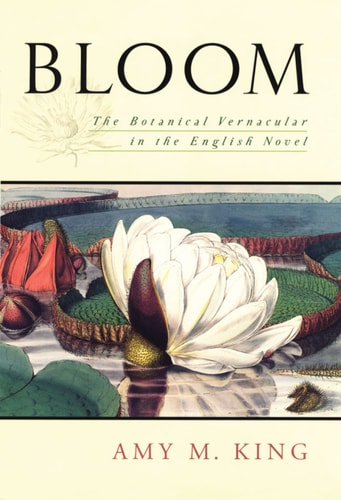
Bloom: The Botanical Vernacular in the English Novel
0
0
As an Amazon Associate and affiliate partner, Menrva Books earns from qualifying purchases. Learn more
Author Description
Starting from the botanical crazes inspired by Linnaeus in the eighteenth century, and exploring the variations it spawned--natural history, landscape architecture, polemical battles over botany's prurience--this study offers a fresh, detailed reading of the courtship novel from Jane Austen to George Eliot and Henry James. By reanimating a cultural understanding of botany and sexuality that we have lost, it provides an entirely new and powerful account of the novel's role in scripting sexualized courtship, and illuminates how the novel and popular science together created a cultural figure, the blooming girl, that stood at the center of both fictional and scientific worlds.
Menrva's Summary
THE THESIS
This study investigates how the intersection of eighteenth and nineteenth-century botanical science and the English courtship novel shaped cultural perceptions of sexuality and gender. Amy C. King, an academic specializing in Victorian literature and culture, utilizes a synthesis of natural history texts, landscape architecture treatises, and canonical fiction to argue that botany served as a primary metaphor for sexual development. By examining the evolution of the 'blooming girl' archetype, the author demonstrates how popular science and literature collaborated to define social norms regarding courtship and female identity.
THE SCOPE MAP
What You Will Find
- Analysis of the Linnaean influence on eighteenth-century cultural discourse.
- Examination of the 'blooming girl' as a recurring figure in literature and scientific writing.
- Case studies of works by Jane Austen, George Eliot, and Henry James.
- Historical context regarding the perceived prurience of botanical study in the Victorian era.
Scope Limits
- The study does not provide a comprehensive history of botany itself, focusing instead on its literary and cultural applications.
- The analysis is restricted to the English novel tradition and does not extend to continental European literature.
THE AUTHORITY PERSPECTIVE
Scholars frequently cite this work for its innovative approach to linking scientific history with literary analysis. Experts highlight the text as a valuable resource for those studying the intersection of gender, science, and the nineteenth-century novel.
Page Count:
272
Publication Date:
2003-01-01
Publisher:
Oxford University Press
ISBN-10:
0190289783
ISBN-13:
9780190289782
Science History
Gender Studies
English fiction
Cultural History
English
Botany
Literary Criticism
Victorian
English & College Success
Community Tags
Similar Books