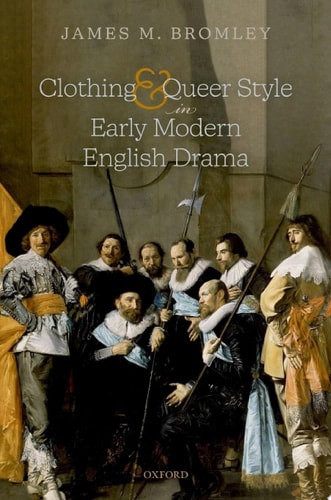
Clothing and Queer Style in Early Modern English Drama
0
0
As an Amazon Associate and affiliate partner, Menrva Books earns from qualifying purchases. Learn more
Author Description
This book examines early modern drama's depiction of non-standard forms of masculinity grounded in superficiality, inauthenticity, affectation, and the display of the extravagantly clothed body. Practices of extravagant dress destabilized distinctions between able-bodied and disabled, human and non-human, and the past and present, distinctions that structure normative ways of thinking about sexuality. In city comedies by Ben Jonson, George Chapman, Thomas Middleton, and Thomas Dekker, extravagantly dressed male characters imagine alternatives to the prevailing modes of subjectivity, sociability, and eroticism in early modern London. While these characters are situated in hostile narrative and historical contexts, this book draws on recent work on disability, materiality, and queer temporality to rethink their relationship to those contexts in order to access the world-making possibilities of early modern queer style. In their rich representations of life in London around the turn of the seventeenth century, these plays not only were, but also remain, uniquely sensitive to the intersection of sexuality, urbanization, and material culture. The attachments and pleasures of early modern sartorial extravagance they depict can estrange us from the epistemologies that narrow current thinking about sexuality's relationship to authenticity, pedagogy, interiority, and privacy.
Menrva's Summary
THE THESIS
This book investigates how the representation of extravagant clothing in early modern English drama functions as a site for challenging normative constructions of masculinity and sexuality. James M. Bromley, an academic specializing in early modern literature, utilizes a framework that integrates disability studies, materiality, and queer temporality. By analyzing city comedies from the turn of the seventeenth century, he argues that sartorial display allowed characters to construct alternative modes of subjectivity and eroticism that resisted the rigid social structures of the period.
THE SCOPE MAP
What You Will Find
- Analysis of city comedies by Ben Jonson, George Chapman, Thomas Middleton, and Thomas Dekker.
- Theoretical application of queer temporality and disability studies to early modern material culture.
- Examination of the intersection between urbanization, fashion, and non-normative masculinity.
Scope Limits
- The study is primarily focused on male characters and masculine identity within specific early modern dramatic texts.
- It does not provide a comprehensive history of fashion, but rather focuses on the symbolic and performative function of clothing in drama.
THE AUTHORITY PERSPECTIVE
Scholars in the field of early modern studies frequently cite this work for its nuanced integration of material culture and queer theory. It is recognized as a significant contribution to understanding how dramatic representations of affectation and surface-level identity complicate historical perceptions of sexuality.
Page Count:
232
Publication Date:
2021-01-01
Publisher:
OUP Oxford
ISBN-10:
0192638068
ISBN-13:
9780192638069
Early Modern
English drama
Queer Studies
Gender Studies
English literature
Cultural History
English & College Success
English
Literary Criticism
In literature
Community Tags
Similar Books