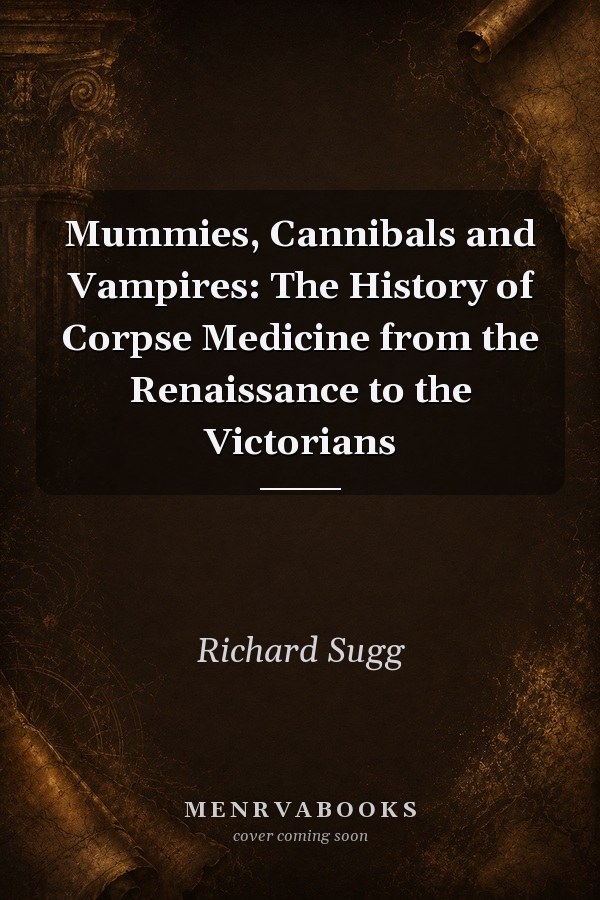
Mummies, Cannibals and Vampires: The History of Corpse Medicine from the Renaissance to the Victorians
Author Description
Mummies, Cannibals And Vampires Charts In Vivid Detail The Largely Forgotten History Of European Corpse Medicine, When Kings, Ladies, Gentlemen, Priests And Scientists Prescribed, Swallowed Or Wore Human Blood, Flesh, Bone, Fat, Brains And Skin Against Epilepsy, Bruising, Wounds, Sores, Plague, Cancer, Gout And Depression. One Thing We Are Rarely Taught At School Is This: James I Refused Corpse Medicine; Charles Ii Made His Own Corpse Medicine; And Charles I Was Made Into Corpse Medicine. Ranging From The Execution Scaffolds Of Germany And Scandinavia, Through The Courts And Laboratories Of Italy, France And Britain, To The Battlefields Of Holland And Ireland, And On To The Tribal Man-eating Of The Americas, Mummies, Cannibals And Vampires Argues That The Real Cannibals Were In Fact The Europeans. Medicinal Cannibalism Utilised The Formidable Weight Of European Science, Publishing, Trade Networks And Educated Theory. For Many, It Was Also An Emphatically Christian Phenomenon. And, Whilst Corpse Medicine Has Sometimes Been Presented As A Medieval Therapy, It Was At Its Height During The Social And Scientific Revolutions Of Early-modern Britain. It Survived Well Into The Eighteenth Century, And Amongst The Poor It Lingered Stubbornly On Into The Time Of Queen Victoria. This Innovative Book Brings To Life A Little Known And Often Disturbing Part Of Human History-- Corpse Medicine From The Middle Ages To Caroline England -- Corpse Medicine From The Civil War To The Eighteenth Century -- The Bloody Harvest: Sources Of Human Body Parts -- The Other Cannibals: Man-eaters Of The New World -- Dirty History, Filthy Medicine -- Eating The Soul -- Opposition And Ambivalence: Pre-eighteenth Century -- The Eighteenth Century -- Conclusion: Afterlives. Richard Sugg. Includes Bibliographical References And Index.
Menrva's Summary
THE THESIS
This book investigates the historical prevalence and cultural legitimacy of medicinal cannibalism in Europe from the Renaissance through the Victorian era. Richard Sugg, a scholar of early modern history, utilizes a wide array of primary sources, including medical treatises, royal records, and personal accounts, to challenge the perception of cannibalism as a strictly non-European phenomenon. He argues that the consumption of human remains—ranging from blood and bone to fat and skin—was a widespread, scientifically supported, and often Christian-sanctioned practice among the European elite and commoners alike.
THE SCOPE MAP
What You Will Find
- Historical analysis of corpse medicine practices from the Renaissance to the Victorian period.
- Examination of the trade networks and supply chains for human body parts sourced from execution scaffolds and battlefields.
- Comparative study of European medicinal cannibalism versus colonial perceptions of indigenous practices.
- Discussion of the intersection between early modern science, religious belief, and the consumption of human remains.
THE AUTHORITY PERSPECTIVE
Historians and medical researchers frequently cite this work for its meticulous documentation of a largely overlooked aspect of early modern medicine. Experts highlight the text as a significant contribution to the study of how cultural taboos and scientific paradigms evolve over time.
Page Count:
374
Publication Date:
2012-01-01
Publisher:
Taylor & Francis Group
ISBN-10:
0203154185
ISBN-13:
9780203154182
History
MEDICAL History
Religious Aspects
European History
Anthropology
Medicine Magic mystic and spagiric
Community Tags
Similar Books