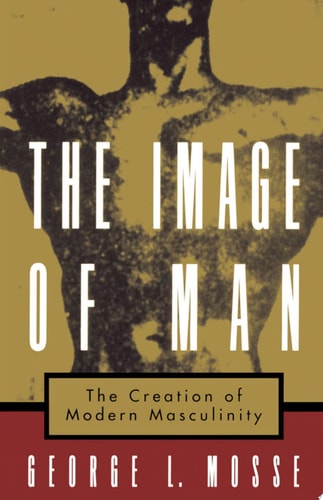
The Image of Man: The Creation of Modern Masculinity
0
0
As an Amazon Associate and affiliate partner, Menrva Books earns from qualifying purchases. Learn more
Author Description
The stereotype of masculinity embraces many qualities. To be manly one must be brave, daring, and cool under fire. A man must be physically strong--tough, skillful, dexterous. And one must also be honorable, honest, and courteous. A man must not complain. A man must not lose control of his emotions. A man must not cry. Even today, many men would accept these qualities as defining masculinity. But how did our idea of manliness evolve? How long have these qualities been the norm? And will they continue to be our basic image of man? In The Image of Man, noted historian George L. Mosse provides the first historical account of the masculine stereotype in modern Western culture, tracing the evolution of the idea of manliness to reveal how it came to embody physical beauty, courage, moral restraint, and a strong will. This stereotype, he finds, originated in the tumultuous changes of the eighteenth century, as Europe's dominant aristocrats grudgingly yielded to the rise of the professional, bureaucratic, and commercial middle classes. Mosse reveals how the new bourgeoisie, faced with a bewildering, rapidly industrialized world, latched onto the knightly ideal of chivalry. And he shows how the rise of universal conscription created a "soldierly man" as an ideal type. In England, the nineteenth century gave rise to an educational system that emphasized athletics, team sports, and physical strength, as did the gymnastics movement on the continent. At the same time, ideals of masculine beauty developed throughout the continent, intertwined with theories of art and personal comportment. And dueling experienced a renaissance, spreading throughout society, though tinged by each country's character (in France, many duels were fought, but few ended in death, whereas Germans evolved an almost bureaucratic set of rules governing such combats--participants used pistols rather than swords, leading to a high fatality rate). Indeed, in the nineteenth century, the idea of manliness appear
Menrva's Summary
THE THESIS
This work investigates the historical origins and evolution of the modern masculine stereotype in Western culture, questioning how specific traits became synonymous with manliness. George L. Mosse, a distinguished historian, utilizes a broad range of cultural and social history to argue that the contemporary ideal of the 'manly man' is a construct emerging from the eighteenth-century transition from aristocratic to bourgeois dominance. He examines how industrialization, the rise of the middle class, and the institutionalization of education and military service codified these behavioral and physical expectations.
THE SCOPE MAP
What You Will Find
- Analysis of the shift from aristocratic to bourgeois masculine ideals.
- Examination of the role of universal conscription and the 'soldierly man' archetype.
- Exploration of nineteenth-century educational systems, athletics, and the gymnastics movement.
- Comparative study of dueling cultures across European nations.
- Discussion of the intersection between aesthetics, physical beauty, and moral character.
Scope Limits
- The analysis is primarily focused on Western European cultural history.
- The text does not provide an exhaustive study of non-Western or pre-eighteenth-century concepts of masculinity.
THE AUTHORITY PERSPECTIVE
Scholars and historians frequently cite this work as a foundational text for understanding the cultural construction of gender roles in the modern era. Readers often note the academic rigor of the prose, which provides a dense but clear examination of how social institutions shape individual identity.
Page Count:
237
Publication Date:
1998-01-01
Publisher:
Oxford University Press
ISBN-10:
0190284382
ISBN-13:
9780190284381
History
Mens Studies
Cultural History
Gender Studies
Sociology
Men
European History
Community Tags
Other Editions(2)
Similar Books








Reader Comments
Share Your Thoughts
No comments yet. Be the first to share your thoughts!