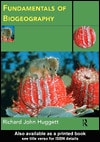
Fundamentals of Biogeography
0
0
As an Amazon Associate and affiliate partner, Menrva Books earns from qualifying purchases. Learn more
Author Description
Fundamentals of Biogeography presents an engaging and comprehensive introduction to biogeography, explaining the ecology, geography, and history of animals and plants. Defining and explaining the nature of populations, communities and ecosystems the book examines where different animals and plants live and how they came to be living there. It also investigates how populations grow, interact and survive, and how communities are formed and change, and predicts the shape of communities in the twenty-first century. Illustrated throughout with informative diagrams and attractive photos (many in colour) and including guides to further reading, chapter summaries and an extensive glossary of key terms Fundamentals of Biogeography clearly explains key concepts, life systems and interactions. The book also tackles the most topical and controversial environmental and ethical concerns including: animal rights, species exploitation, habitat fragmentation, biodiversity, metapopulations, patchy landscapes and chaos.Fundamentals of Biogeography presents an appealing introduction for students and all those interested in gaining a deeper understanding of the key topics and debates within the fields of biogeography, ecology and the environment. Revealing how life has and is adapting to its biological and physical surroundings this text stresses the role of ecological, geographical, historical and human factors in fashioning animal and plant distributions and raises important questions concerning how humans have altered Nature and how biogeography can affect conservation practice.
Menrva's Summary
THE THESIS
This text investigates the fundamental mechanisms governing the distribution of life across the planet, seeking to explain how ecological, geographical, and historical factors shape the existence of plants and animals. Richard J. Huggett, a recognized scholar in the field, synthesizes complex biological and physical data to provide a comprehensive framework for understanding species distribution. The book argues that human intervention has become a primary driver of environmental change, necessitating a deeper understanding of biogeography to inform modern conservation practices.
THE SCOPE MAP
What You Will Find
- Analysis of population dynamics, community formation, and ecosystem development.
- Examination of historical and geographical influences on current species distribution patterns.
- Discussion of contemporary environmental issues including habitat fragmentation, biodiversity loss, and species exploitation.
- Methodological tools for interpreting ecological interactions and predicting future community structures.
THE AUTHORITY PERSPECTIVE
Experts and educators frequently cite this work as a foundational text for students entering the fields of ecology and environmental science. Readers often note the clarity of the prose and the utility of the included pedagogical aids, such as the extensive glossary and chapter summaries, which make dense scientific concepts accessible to a broader audience.
Page Count:
439
Publication Date:
2004-01-01
Publisher:
Taylor & Francis Inc
ISBN-10:
0203172930
ISBN-13:
9780203172933
Non-Fiction
Science
Ecology
Biology
Nonfiction
Geography
Biogeography