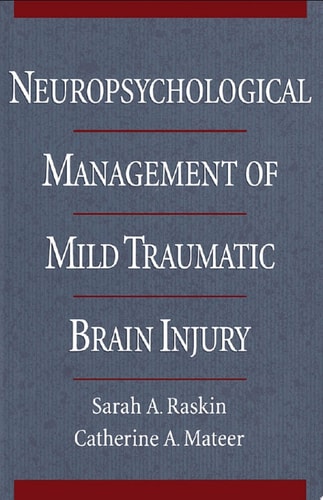
Neuropsychological Management of Mild Traumatic Brain Injury
0
0
As an Amazon Associate and affiliate partner, Menrva Books earns from qualifying purchases. Learn more
Author Description
Despite the importance of the problem, strikingly little has been written about effective approaches to the treatment of individuals with mild to moderate brain injury. This book is designed for neuropsychologists, counseling and rehabilitation psychologists, and other rehabilitation professionals who work with individuals who have sustained brain injuries of mild to moderate severity. It provides a context for understanding and evaluating the common consequences of such injuries and offers both theoretical perspectives and practical suggestions for helping individuals to adjust to and compensate for residual difficulties. Early chapters focus on different domains of cognitive functioning, while later chapters describe clinical approaches to helping clients manage common emotional reactions such as depression, irritability, and anxiety. While the book acknowledges and discusses the controversy about the origins of persistent symptoms following mild brain injures, it does not focus on the controversy. Rather, it adopts a "what works" approach to dealing with individuals who have persistent symptoms and perceptions that contribute to disability and to emotional distress. Many of these individuals benefit significantly from neuropsychological intervention. Case examples throughout the book illustrate the adaptation of cognitive, cognitive-behavioral, and traditional psychotherapeutic approaches to individuals with mild to moderate brain injury. Self-regulation and self-management of both cognitive failures and emotional responses are described as appropriate and effective in this population.
Menrva's Summary
THE THESIS
This book investigates effective clinical approaches for the treatment and management of individuals experiencing persistent symptoms following mild to moderate traumatic brain injury. Authors Catherine A. Mateer and Sarah A. Raskin, both established experts in neuropsychology and rehabilitation, provide a framework for clinicians to evaluate cognitive and emotional consequences. The text prioritizes practical intervention strategies over theoretical debate, focusing on how professionals can assist patients in compensating for residual deficits and managing emotional distress.
THE SCOPE MAP
What You Will Find
- Clinical strategies for addressing cognitive functioning deficits
- Techniques for managing emotional reactions including depression, irritability, and anxiety
- Integration of cognitive-behavioral and traditional psychotherapeutic modalities
- Case examples demonstrating real-world application of interventions
Scope Limits
- Does not focus on the academic or diagnostic controversies surrounding the origins of persistent symptoms
- Primarily targeted at professional clinicians rather than patients or caregivers
THE AUTHORITY PERSPECTIVE
Experts recognize this work as a foundational clinical resource for neuropsychologists and rehabilitation professionals seeking actionable treatment protocols. Readers frequently note the practical utility of the case studies in bridging the gap between theoretical neuropsychology and daily clinical practice.
Page Count:
290
Publication Date:
1999-01-01
Publisher:
Oxford University Press
ISBN-10:
019028210X
ISBN-13:
9780190282103
Psychology
Rehabilitation
Brain Injury
Allied Health
Medical
Community Tags
Similar Books