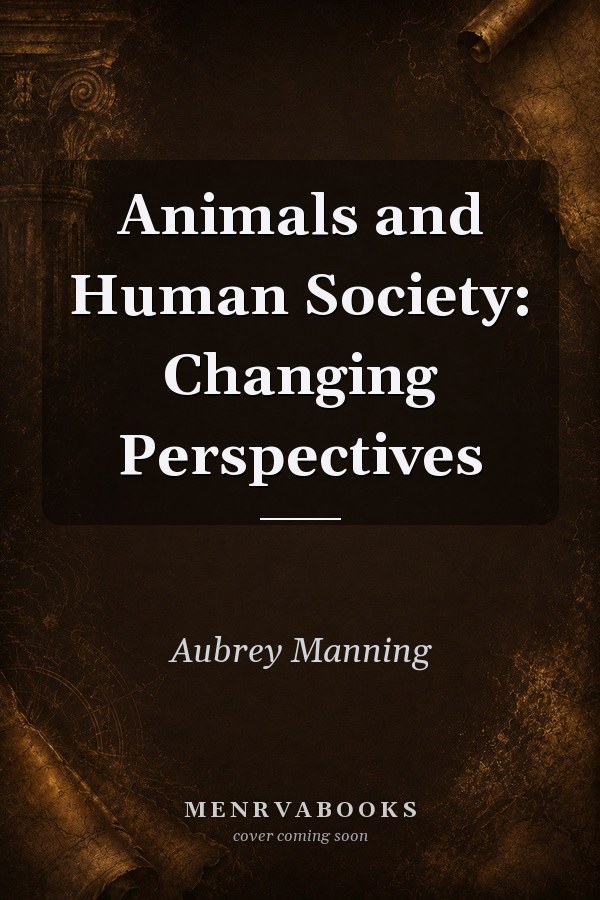
Animals and Human Society: Changing Perspectives
0
0
As an Amazon Associate and affiliate partner, Menrva Books earns from qualifying purchases. Learn more
Author Description
Over the millennia, human relationships with animals have taken some extraordinary forms. Animals have been worshipped as gods, reviled as evil spirits or as symbols of human depravity. They have been cruelly mistreated as mindless automata, tried and executed for criminal acts, and welcomed into our families as loved companions. And because we have always lived at their expense, animals have also provided a rich and disturbing source of moral conflicts and paradoxes. Nowhere is this more apparent than in the industrial West. Our society is re-examining its whole relationship with animals and the natural world. Until recently, issues such as animal welfare, wildlife conservation and environmental protection were considered the domain of small, idealistic minorities. Now, they have become matters of widespread public and political concern. But is this sudden explosion of interest in the plight of non-human animals purely a western phenomenon without cultural parallels or historical precedents? Or are our current concerns about animals simply the most recent manifestation of an ancient and recurring human preoccupation? Animals and Human Society seeks to answer these questions through a wide-ranging historical, cross-cultural and contemporary reappraisal of human attitudes to animals. The distinguished contributors to Animals and Human Society draw their insights from a variety of disciplines. The book will therefore be of great interest to students of anthropology, sociology and history, as well as to all those concerned about the current status of animals and nature.
Menrva's Summary
THE THESIS
This book investigates the historical, cultural, and moral complexities of the human-animal relationship to determine if modern concerns regarding animal welfare are unique to the industrial West or part of a recurring human preoccupation. The authors, Aubrey Manning and James Serpell, curate a collection of interdisciplinary essays that examine how animals have been perceived, utilized, and integrated into human societies over millennia. By synthesizing perspectives from anthropology, sociology, and history, the text provides a framework for understanding the paradoxes inherent in our treatment of non-human species. The work challenges the reader to consider whether contemporary environmental and animal rights movements represent a fundamental shift in consciousness or a continuation of ancient human attitudes.
THE SCOPE MAP
What You Will Find
- Historical analysis of animal representation in religion, folklore, and legal systems.
- Cross-cultural comparisons of human-animal interactions across diverse global societies.
- Examination of the shift from viewing animals as commodities to recognizing them as sentient companions.
- Discussion of the moral conflicts inherent in industrial-scale animal use and environmental conservation.
THE AUTHORITY PERSPECTIVE
Experts and academics frequently cite this work as a foundational text for those exploring the intersection of human culture and animal studies. Readers note the scholarly density of the contributions, which provide a comprehensive overview of the subject for students and researchers alike.
Page Count:
0
Publication Date:
1994-01-01
Publisher:
Routledge
ISBN-10:
0203305469
ISBN-13:
9780203305461
History
Animals
Anthropology
Animal Studies
Sociology
Human Relationships
Community Tags
Other Editions(3)


Similar Books







Reader Comments
Share Your Thoughts
No comments yet. Be the first to share your thoughts!