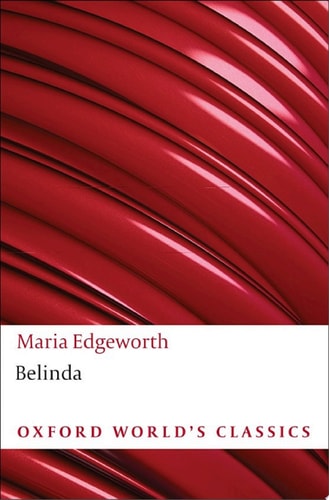
Belinda
0
0
As an Amazon Associate and affiliate partner, Menrva Books earns from qualifying purchases. Learn more
Author Description
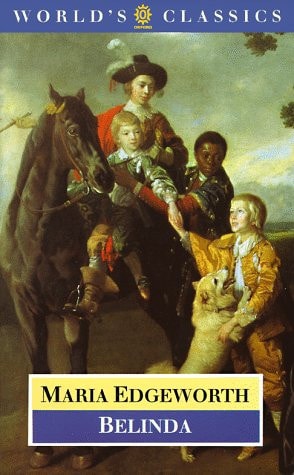
Maria Edgeworth Won The Admiration Of Her Contemporary Jane Austen, As Well As Later Writers Such As Thackeray And Turgenev, And In Belinda (1801) She Tackles Issues Of Gender And Race In A Manner At Once Comic And Thought-provoking. Braving The Perils Of The Marriage Market, Belinda Learns To Think For Herself As The Examples Of Her Friends Prove Singularly Unreliable. Edgeworth's Varied Cast Includes The Bewitching Aristocrat, Lady Delacour, Whose Dreadful Secret Puts Her In The Power Of Her Volatile Servant; The Dashing Creole Gentleman, Mr Vincent Who Almost Succeeds In Winning Belinda's Hand If Not Her Heart; The Eccentric Clarence Hervey, Whose Attempts To Create An Ideal Wife Backfire; And The Outrageous Harriet Freke, Whose Antics As Social Outlaw Land Her In A Mantrap. This Lively Comedy Challenges The Conventions Of Courtship, Examines Questions Of Female Independence, And Exposes The Limits Of Domesticity. The Text Used In This Edition (1802) Also Confronts The Difficult And Fascinating Issues Of Racism And Mixed Marriage, Which Edgeworth Toned Down In Later Editions. About The Series: For Over 100 Years Oxford World's Classics Has Made Available The Widest Range Of Literature From Around The Globe. Each Affordable Volume Reflects Oxford's Commitment To Scholarship, Providing The Most Accurate Text Plus A Wealth Of Other Valuable Features, Including Expert Introductions By Leading Authorities, Helpful Notes To Clarify The Text, Up-to-date Bibliographies For Further Study, And Much More.
Menrva's Summary
THE PULSE
Belinda Portman enters the complex social sphere of London society, where she must navigate the unreliable guidance of her peers to secure her own future. As she attempts to establish her independence within the rigid structures of the marriage market, she encounters various figures who challenge her moral and social perceptions. The narrative follows her interactions with the enigmatic Lady Delacour and several suitors, forcing her to evaluate the authenticity of those around her. Written in a third-person perspective, the novel examines the tension between societal expectations and individual agency.
INSIDE THE PAGES
- Satirical examination of 18th-century marriage markets
- Exploration of female autonomy and intellectual independence
- Complex character studies of aristocratic figures
- Critique of domesticity and social conventions
- Inclusion of themes regarding race and interracial relationships
- Use of irony to expose hypocrisy in high society
- Detailed portrayal of social class dynamics
- Contrast between genuine character and performative social behavior
THE COLLECTIVE ECHO
Readers and critics frequently note the novel's significance as a bridge between the moralistic fiction of the 18th century and the more nuanced social realism of the 19th century. Discussion often centers on Edgeworth's sharp wit and her ability to critique the gendered expectations of her era through a comedic lens. Many observers highlight the complexity of the character Lady Delacour, whose personal struggles provide a stark contrast to the protagonist's more straightforward development. The text is often analyzed for its bold inclusion of racial themes, which generated significant discourse regarding the author's evolving perspectives on social issues. Readers generally find the pacing to be consistent with the period's style, offering a detailed look at the social mechanics of the time.
Page Count:
544
Publication Date:
1999-01-01
Publisher:
Oup Oxford
ISBN-10:
0191611220
ISBN-13:
9780191611223
Romance
19th Century
classic
Historical
Social Satire
Community Tags
Other Editions(15)

Digireads.com
2021
Default edition
HardPress
2020
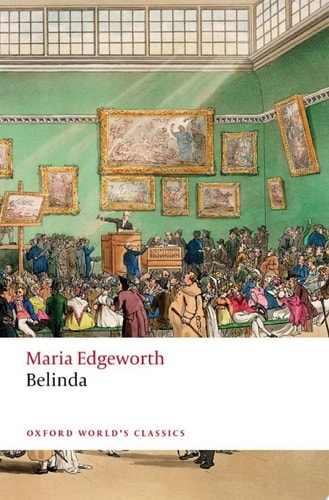
OUP Oxford
2020

Creative Media Partners, LLC
2018

Creative Media Partners, LLC
2018

CreateSpace Independent Publishing Platform
2018
Creative Media Partners, LLC
2018

Nabu Press
2011

Kessinger Publishing, LLC
2010
Nabu Press
2010
General Books LLC
2010
Nabu Press
2010

Pickering & Chatto
2003
Oup Oxford
1999
Oxford University Press
1994
Similar Books
Reader Comments
Share Your Thoughts
No comments yet. Be the first to share your thoughts!