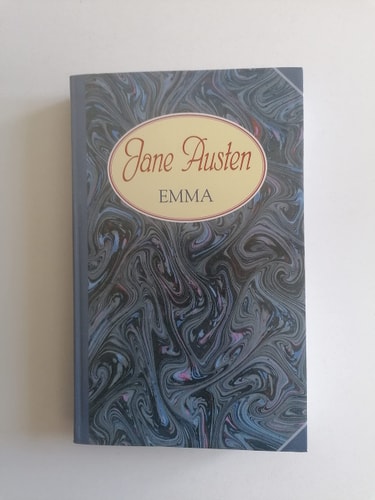
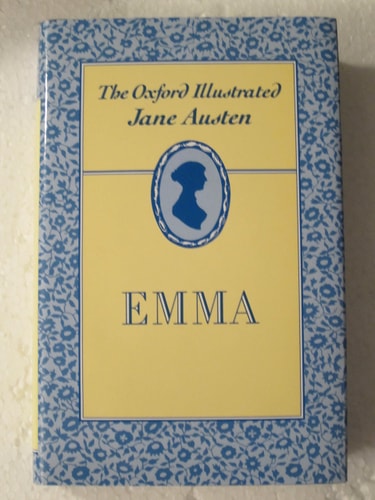
Emma
0
0
As an Amazon Associate and affiliate partner, Menrva Books earns from qualifying purchases. Learn more
Author Description
Emma (1816), is Jane Austen's comic masterpiece in which Emma Woodhouse finds her match-making skills sadly misdirected as she learns humility and self-knowledge at the same time as she discovers love. This edition features a new Introduction by Penelope Fitzgerald which examines the pleasure given by Emma's reassuringly stable world as well as by its comedy, and examines the relationships, imagery, and continuing power of Austen's last and perhaps greatest novel.
Menrva's Summary
THE PULSE
Emma Woodhouse, a wealthy and self-assured young woman, inadvertently disrupts the social order of her small village by meddling in the romantic lives of her acquaintances. Convinced of her own superior judgment, Emma attempts to orchestrate matches for those around her, often ignoring the genuine desires of the individuals involved. Her primary opposition arises from the pragmatic and observant Mr. Knightley, who frequently challenges her assumptions and highlights the consequences of her interference. The narrative unfolds through a third-person limited perspective, focusing on Emma's internal rationalizations and her gradual realization of her own fallibility within the rigid social framework of Highbury.
INSIDE THE PAGES
- Third-person limited narration focused on the protagonist's internal monologue
- Satirical examination of Regency-era social hierarchies and manners
- Use of irony to highlight the gap between perception and reality
- Character-driven plot centered on personal growth and self-awareness
- Detailed depiction of provincial life and social rituals
- Exploration of the complexities of friendship and romantic attraction
- Dialogue-heavy scenes that reveal character motivations and social tensions
- Gradual shift in tone from lighthearted comedy to introspective drama
THE COLLECTIVE ECHO
Readers and critics frequently highlight the precision of Austen's prose and her ability to balance sharp social critique with genuine character development. Discussion often centers on the complexity of the protagonist, as her flaws and eventual growth provide a nuanced look at the limitations placed on women of her time. The atmosphere of the novel is often described as both stable and claustrophobic, reflecting the rigid expectations of the landed gentry. Many readers appreciate the intellectual rigor of the interactions between Emma and Mr. Knightley, which serve as the moral anchor of the story. The work remains a subject of study for its structural integrity and its enduring commentary on the dangers of arrogance.
Page Count:
464
Publication Date:
1999-09-16
Publisher:
Oxford University Press
ISBN-10:
0192100300
ISBN-13:
9780192100306
Romance
Satire
classic
19th Century
Emma Woodhouse Fictitious character
Young women
England
Great Britain
Social Commentary
Community Tags
Other Editions(34)
Independently Published
2022
Default edition
Independently Published
2022
Independently Published
2021
Independently Published
2021
Independently Published
2021
Independently Published
2021
Independently Published
2021
Independently Published
2021
Independently Published
2021
Independently Published
2020
Independently Published
2020
Independently Published
2020
Independently Published
2020
Independently Published
2019
Independently published
2019
Independently Published
2019
Independently Published
2018
Oxford University Press España, S.A.
2016
Oxford University Press
2010
General Books LLC
2010

General Books LLC
2009
Recorded Books, Inc.
2009
Oxford University Press
2008

Oxford University Press
2008

Oxford University Press
2005
Recorded Books, Inc.
2003
Oxford University Press
1999
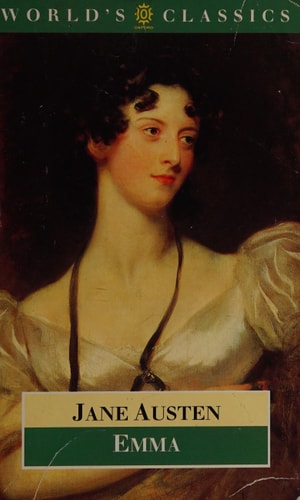
Oxford University
1996
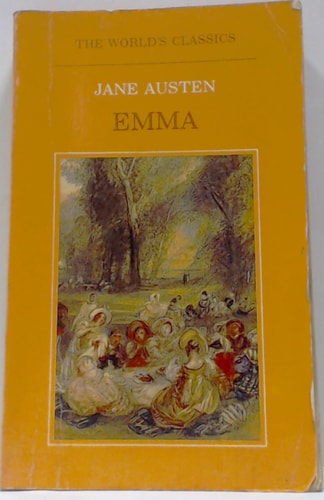
Oxford University Press
1980
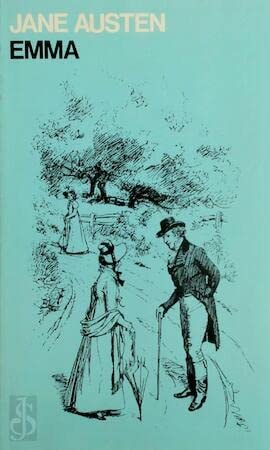
Oxford University Press
1975
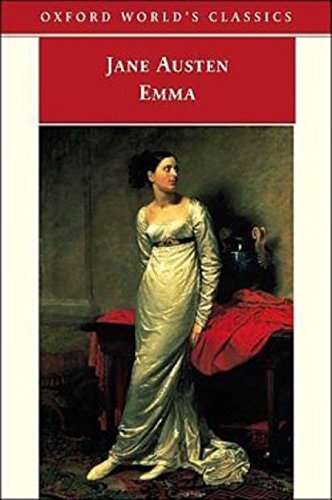
Oxford University Press
1971
Oxford University Press
1933
Huge Print Press
1900
Oxford University Press
1900
Similar Books



Reader Comments
Share Your Thoughts
No comments yet. Be the first to share your thoughts!