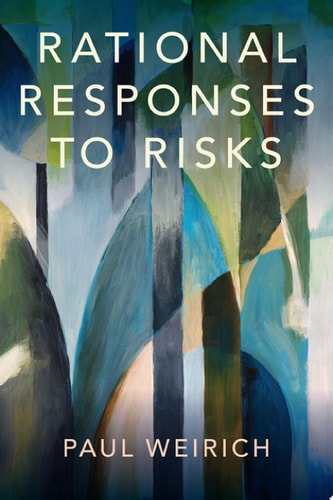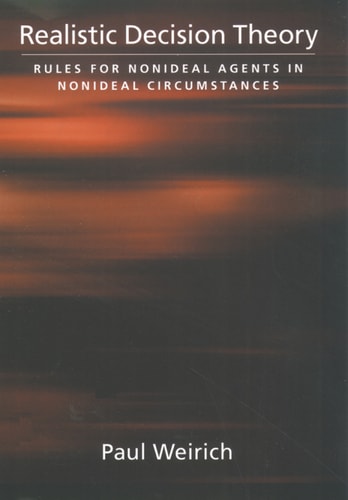
Realistic Decision Theory: Rules for Nonideal Agents in Nonideal Circumstances
0
0
As an Amazon Associate and affiliate partner, Menrva Books earns from qualifying purchases. Learn more
Author Description
Within traditional decision theory, common decision principles -- e.g. the principle to maximize utility -- generally invoke idealization; they govern ideal agents in ideal circumstances. In Realistic Decision Theory, Paul Weirch adds practicality to decision theory by formulating principles applying to nonideal agents in nonideal circumstances, such as real people coping with complex decisions. Bridging the gap between normative demands and psychological resources, Realistic Decision Theory is essential reading for theorists seeking precise normative decision principles that acknowledge the limits and difficulties of human decision-making.
Menrva's Summary
THE THESIS
This book investigates how normative decision principles can be adapted to govern nonideal agents operating within nonideal, real-world circumstances. Paul Weirich, a philosopher specializing in decision theory, bridges the divide between abstract utility maximization and the practical constraints of human psychology. By formulating principles that account for cognitive limitations and environmental complexity, the author provides a framework for rational choice that remains applicable to actual human decision-making processes.
THE SCOPE MAP
What You Will Find
- Principles for decision-making under bounded rationality
- Analysis of the gap between normative demands and psychological resources
- Theoretical models for agents with limited information and processing power
Scope Limits
- The text does not provide a comprehensive psychological study of human behavior
- It does not offer a practical self-help guide for daily life management
THE AUTHORITY PERSPECTIVE
Experts recognize this work as a significant contribution to the formalization of realistic normative standards in decision theory. Readers frequently note the academic density of the prose, which is intended for scholars and advanced students of philosophy and logic.
Page Count:
277
Publication Date:
2004-01-01
Publisher:
Oxford University Press
ISBN-10:
0190291117
ISBN-13:
9780190291112
Philosophy
Professional Career & Trade
Logic & Critical Reasoning
Special Topics
Decision Making
Ethics
Logic
Decision Theory
Community Tags
Similar Books