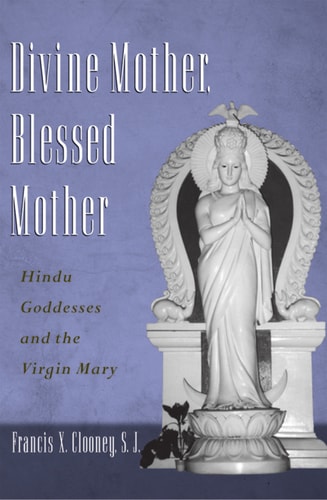
Divine Mother, Blessed Mother: Hindu Goddesses and the Virgin Mary
0
0
As an Amazon Associate and affiliate partner, Menrva Books earns from qualifying purchases. Learn more
Author Description
In Divine Mother, Blessed Mother, Francis X. Clooney, S.J., a scholar of Hinduism as well as a Catholic priest and theologian, offers the first full-length comparative study of Hindu goddesses and the Virgin Mary. Clooney begins by looking at three specific goddesses as they are presented and addressed in religiously and theologically rich hymns from the Sanskrit and Tamil traditions: Laksmi, the eternal consort of Lord Visnu and life-giver to Him and all the world; the great Goddess Devi, in whom the world and gods too exist and flourish; and the lovely Tamil Goddess Abirami, who illumines the inmost mind and heart. Clooney then shows how Goddess traditions can be drawn into fruitful conversation with Christian tradition, taking a fresh look at the veneration and theology of Mary, the Mother of Jesus and Mother of God, as displayed in three famous Marian hymns from the Greek, Latin, and Tamil traditions. The book is enriched by the inclusion of fresh and full translations of all of the hymns, including two translated here for the first time. Analyzing these six Hindu and Christian hymns, Clooney examines such questions as: How have Hindu theologians made room for a feminine divine alongside the masculine--and why? How has Christian thinking about divine gender differed from Hindu thinking? What might contemporary feminists learn from the goddess traditions of India? How might the study of Hindu goddesses affect Christian thinking about God and Mary? This is a book to read for its insights into the nature of gender and the divine, for the power of the hymns themselves, and for the sake of a religious adventure, an encounter with three Goddess traditions and Mary seen in a new light.
Menrva's Summary
THE THESIS
This work investigates the theological and devotional parallels between Hindu goddess traditions and the veneration of the Virgin Mary within Christian thought. Francis X. Clooney, a Jesuit priest and scholar of Hinduism, utilizes a comparative methodology to bridge these two distinct religious frameworks. By examining primary liturgical texts, he argues that the feminine divine serves as a critical lens for re-evaluating gender roles and theological structures in both traditions.
THE SCOPE MAP
What You Will Find
- Comparative analysis of six specific hymns from Sanskrit, Tamil, Greek, and Latin traditions.
- Theological exploration of Lakshmi, Devi, and Abirami alongside the Virgin Mary.
- Original translations of devotional hymns, including two previously untranslated texts.
Scope Limits
- The study does not provide an exhaustive history of all Hindu goddess traditions or all global Marian devotions.
- It focuses primarily on liturgical and theological texts rather than sociological or anthropological data.
THE AUTHORITY PERSPECTIVE
Scholars and theologians frequently cite this work as a significant contribution to the field of comparative theology due to its rigorous textual analysis. Readers often note the academic density of the prose, which requires a foundational understanding of both Hindu and Christian theological concepts to fully appreciate the author's arguments.
Page Count:
278
Publication Date:
2004-01-01
Publisher:
Oxford University Press
ISBN-10:
0190290978
ISBN-13:
9780190290979
Religion
Christianity and other religions
Christian Theology
Gender Studies
Mariology
Hinduism
Community Tags
Similar Books