
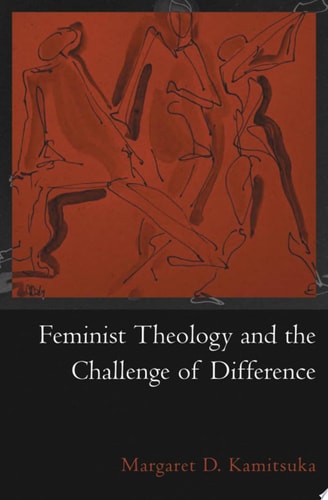
Feminist Theology and the Challenge of Difference
0
0
As an Amazon Associate and affiliate partner, Menrva Books earns from qualifying purchases. Learn more
Author Description
In the early years of contesting patriarchy in the academy and religious institutions, feminist theology often presented itself as a unified front, a sisterhood. The term "feminist theology," however, is misleading. It suggests a singular feminist purpose driven by a unified female cultural identity that struggles as a cohesive whole against patriarchal dominance. Upon closer inspection, the voice of feminist theology is in fact a chorus of diverging perspectives, each informed by a variety of individual and communal experiences, and an embattled scholarly field, marked by the effects of privilege and power imbalances. This complexity raises an important question: How can feminist theologians respect the irreducible diversity of women's experiences and unmask entrenched forms of privilege in feminist theological discourse? In Feminist Theology and the Challenge of Difference, Margaret D. Kamitsuka urges the feminist theological community to examine critically its most deeply held commitments, assumptions, and goals-especially those of feminist theologians writing from positions of privilege as white or heterosexual women. Focusing on women's experience as portrayed in literature, biblical narrative, and ethnographic writing, Kamitsuka examines the assumptions of feminist theology regarding race and sexuality. She proposes theoretical tools that feminist theologians can employ to identify and hopefully avoid the imposition of racial or sexual hegemony, thus providing invaluable complexity to the movement's identity, and ultimately contributing to current and future Christian theological issues. Blending poststructuralist and postcolonial theoretical resources with feminist and queer concerns, Feminist Theology and the Challenge of Difference makes constructive theological proposals, ranging from sin to christology. The text calls feminist theologians to a more rigorous self-critical approach as they continue to shape the changing face of Christian theological discour
Menrva's Summary
THE THESIS
How can feminist theologians respect the irreducible diversity of women's experiences and unmask entrenched forms of privilege in feminist theological discourse? Margaret D. Kamitsuka, a scholar in the field of religious studies, utilizes a critical framework to evaluate the historical tendency of feminist theology to present a monolithic front. She argues that the field must move beyond a unified sisterhood model to address internal power imbalances, specifically those related to race and sexuality, by adopting more rigorous self-critical methodologies.
THE SCOPE MAP
What You Will Find
- Analysis of feminist theological assumptions regarding race and sexuality
- Integration of poststructuralist and postcolonial theoretical frameworks
- Examination of women's experiences through literature, biblical narrative, and ethnography
- Constructive theological proposals covering topics from sin to christology
Scope Limits
- The text focuses primarily on Christian theological discourse rather than comparative world religions
- It does not provide a comprehensive history of all feminist movements, but rather a critique of specific academic and institutional theological practices
THE AUTHORITY PERSPECTIVE
Scholars and students of religion frequently cite this work as a critical intervention in the evolution of feminist theological studies. Experts highlight the text's academic density and its utility as a foundational resource for those examining the intersection of privilege, power, and religious identity.
Page Count:
232
Publication Date:
2007-01-01
Publisher:
Oxford University Press
ISBN-10:
0190295198
ISBN-13:
9780190295196
Religion
Gender Studies
Christian Theology
Feminist Theology
Sociology of Religion
Community Tags
Other Editions(4)


Similar Books


Reader Comments
Share Your Thoughts
No comments yet. Be the first to share your thoughts!