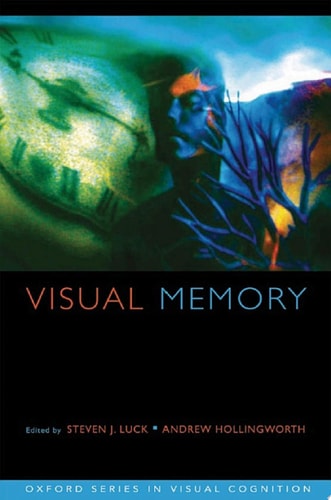
Visual Memory
0
0
As an Amazon Associate and affiliate partner, Menrva Books earns from qualifying purchases. Learn more
Author Description
Vision and memory are two of the most intensively studied topics in psychology and neuroscience. The present book concerns the interaction between vision and memory: How do we remember what we see? And how does our memory for the visual world influence subsequent perception and action? topics in psychology and neuroscience, and the intersection etween them--visual memory--is emerging as a fertile ground for research. Certain memory systems appear to specialize in This book provides a state-of-the-art account of visual memory systems. Each chapter is written by an internationally renowned researcher, who has made seminal contributions to the topic. The chapters are comprehensive, providing both a broad overview of each topic and a summary of the latest research. They also present new perspectives that advance our theoretical understanding of visual memory and suggest directions for future research. After an introductory overview by the editors, chapters address visual sensory memory (iconic memory), visual short-term memory, and the relationship between visual memory and eye movements. Visual long-term memory is then reviewed from several different perspectives, including memory for natural scenes, the relationship between visual memory and object recognition, and associative learning. The final chapters discuss the neural mechanisms of visual memory and neuropsychological deficits in visual memory. This book is a comprehensive guide to visual memory research that will be a valuable resource for both students and professionals.
Menrva's Summary
THE THESIS
This volume investigates the complex intersection of vision and memory, specifically addressing how visual information is encoded, stored, and utilized to guide perception and action. Editors Andrew Hollingworth and Steven J. Luck compile contributions from leading researchers to synthesize current theoretical frameworks and empirical findings. The text serves as a comprehensive overview of the mechanisms underlying visual sensory memory, short-term storage, and long-term recognition processes.
THE SCOPE MAP
What You Will Find
- Analysis of visual sensory memory and iconic memory systems
- Examination of the relationship between visual memory and eye movements
- Exploration of long-term memory in the context of natural scenes and object recognition
- Discussion of neural mechanisms and neuropsychological deficits
Scope Limits
- Does not provide clinical treatment protocols for memory disorders
- Focuses primarily on cognitive and neuroscientific research rather than philosophical or purely behavioral perspectives
THE AUTHORITY PERSPECTIVE
Experts identify this work as a foundational text for researchers and students interested in the cognitive architecture of visual processing. Readers frequently note the academic density of the prose, which is designed for those with a background in psychology or neuroscience.
Page Count:
345
Publication Date:
2008-01-01
Publisher:
Oxford University Press
ISBN-10:
0190294140
ISBN-13:
9780190294144
Psychology
Academic
Neuroscience
Reference
Community Tags
Other Editions(3)
Similar Books








Reader Comments
Share Your Thoughts
No comments yet. Be the first to share your thoughts!