State and Society in Modern Rangoon
0
0
As an Amazon Associate and affiliate partner, Menrva Books earns from qualifying purchases. Learn more
Author Description
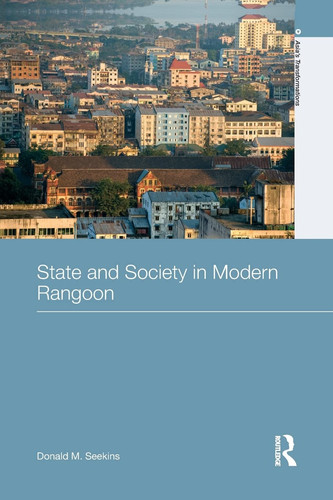
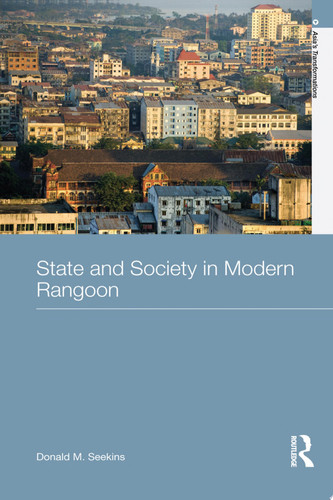
While most of Asia’s major cities are increasingly homogenized by rapid economic growth and cultural globalization, Rangoon, which is Burma’s former capital and largest city, still bears the imprint of a unique and often turbulent history. It is the site of the Shwedagon Pagoda, a focus of Buddhist pilgrimage and devotion since the early second millennium C.E. that continues to play a major role in national life. In 1852, the British occupied Rangoon and made it their colonial capital, building a modern port and administrative center based on western designs. It became the capital of independent Burma in 1948, but in 2005 the State Peace and Development Council military junta established a new, heavily fortified capital at Naypyidaw, 320 kilometers north of the old capital. A major motive for the capital relocation was the regime’s desire to put distance between itself and Rangoon’s historically restive population. Reacting to the huge anti-government demonstrations of "Democracy Summer" in 1988, the new military regime used massive violence to pacify the city and sought to transform it in line with its supreme goal of state security. However, the "Saffron Revolution" of September 2007 showed that Rangoon’s traditions of resistance reaching back to the colonial era are still very much alive.
Menrva's Summary
THE THESIS
This book investigates how the urban landscape and social fabric of Rangoon have been shaped by the competing forces of colonial legacy, military authoritarianism, and persistent civil resistance. Donald M. Seekins, a scholar specializing in Burmese politics and history, utilizes historical analysis and urban observation to examine the city's evolution from a colonial administrative center to a site of modern political defiance. The text argues that the physical layout and symbolic spaces of Rangoon serve as a critical arena for the ongoing struggle between state control and the democratic aspirations of its citizens.
THE SCOPE MAP
What You Will Find
- Historical analysis of Rangoon from the British colonial occupation in 1852 to the modern era.
- Examination of the 1988 Democracy Summer demonstrations and the 2007 Saffron Revolution.
- Analysis of the military junta's strategic relocation of the capital to Naypyidaw.
- Exploration of the intersection between religious sites like the Shwedagon Pagoda and national political identity.
THE AUTHORITY PERSPECTIVE
Experts recognize this work as a significant contribution to the study of urban political geography in Southeast Asia. Readers frequently note the clarity with which the author connects historical architectural planning to contemporary political outcomes in Burma.
Page Count:
252
Publication Date:
2010-06-15
Publisher:
Routledge
ISBN-10:
0415318521
ISBN-13:
9780203610794
History
Asia
Burma
Politics & Government
Urban Studies
Community Tags
Other Editions(6)



Similar Books






Reader Comments
Share Your Thoughts
No comments yet. Be the first to share your thoughts!