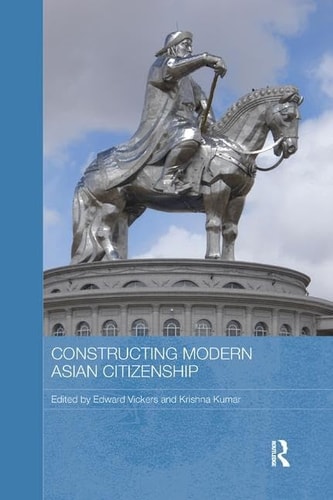
Constructing Modern Asian Citizenship
0
0
As an Amazon Associate and affiliate partner, Menrva Books earns from qualifying purchases. Learn more
Author Description
In Many Non-western Contexts, Modernization Has Tended To Be Equated With Westernization, And Hence With An Abandonment Of Authentic Indigenous Identities And Values. This Is Evident In The Recent History Of Many Asian Societies, Where Efforts To Modernize - Spurred On By The Spectre Of Foreign Domination - Have Often Been Accompanied By Determined Attempts To Stamp National Variants Of Modernity With The Brand Of Local Authenticity: 'asian Values', 'chinese Characteristics', A Japanese Cultural 'essence' And So Forth. Highlighting (or Exaggerating) Associations Between The More Unsettling Consequences Of Modernization And Alien Influence Has Thus Formed Part Of A Strategy Whereby Elites In Many Asian Societies Have Sought To Construct New Forms Of Legitimacy For Old Patterns Of Dominance Over The Masses. The Apparatus Of Modern Systems Of Mass Education, Often Inherited From Colonial Rulers, Has Been Just One Instrument In Such Campaigns Of State Legitimation. This Book Presents Analyses Of A Range Of Contemporary Projects Of Citizenship Formation Across Asia In Order To Identify Those Issues And Concerns Most Central To Asian Debates Over The Construction Of Modern Identities. Its Main Focus Is On Schooling, But Also Examines Other Vehicles For Citizenship-formation, Such As Museums And The Internet; The Role Of Religion (in Particular Islam) In Debates Over Citizenship And Identity In Certain Asian Societies; And The Relationship Between State-centred Identity Discourses And The Experience Of Increasingly 'globalized' Elites-- Provided By Publisher.
Menrva's Summary
THE THESIS
This book investigates how Asian societies construct modern citizenship by balancing the pressures of globalization with the desire to maintain authentic national identities. The authors, Edward Vickers and Krishna Kumar, utilize a comparative framework to analyze how state-led initiatives—particularly within mass education systems—serve to legitimize existing power structures. By examining the tension between Western-influenced modernization and the promotion of local cultural values, the text argues that citizenship formation is a deliberate political project used to navigate the complexities of post-colonial development.
THE SCOPE MAP
What You Will Find
- Comparative analyses of citizenship formation projects across diverse Asian nations.
- Examination of mass education systems as instruments of state legitimation.
- Investigation of non-traditional vehicles for identity construction, including museums and the internet.
- Analysis of the role of religion, specifically Islam, in shaping national identity debates.
- Discussion on the relationship between state-centered discourses and the experiences of globalized elites.
THE AUTHORITY PERSPECTIVE
Experts identify this work as a significant contribution to the study of comparative education and political sociology in Asia. Readers frequently note the academic density of the prose, which provides a rigorous examination of how state apparatuses influence modern identity.
Page Count:
366
Publication Date:
2014-01-01
Publisher:
Taylor & Francis Group
ISBN-10:
1135007276
ISBN-13:
9780203734087
History
Citizenship
Asia
Globalization
Asian Studies
Education
Sociology
Socialization
Community Tags
Other Editions(4)

Similar Books









Reader Comments
Share Your Thoughts
No comments yet. Be the first to share your thoughts!