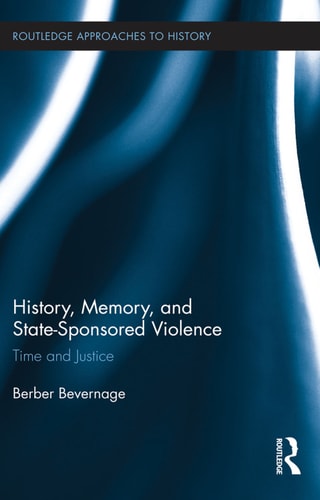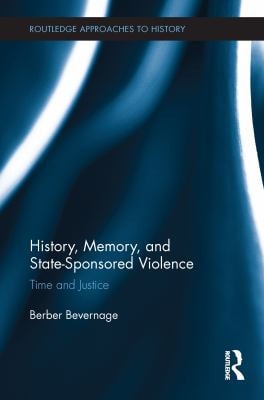
History, Memory, and State-Sponsored Violence
0
0
As an Amazon Associate and affiliate partner, Menrva Books earns from qualifying purchases. Learn more
Author Description
Modern historiography embraces the notion that time is irreversible, implying that the past should be imagined as something "absent" or "distant." Victims of historical injustice, however, in contrast, often claim that the past got "stuck" in the present and that it retains a haunting presence. History, Memory, and State-Sponsored Violence is centered around the provocative thesis that the way one deals with historical injustice and the ethics of history is strongly dependent on the way one conceives of historical time; that the concept of time traditionally used by historians is structurally more compatible with the perpetrators than the victims point of view. Demonstrating that the claim of victims about the continuing presence of the past should be taken seriously, instead of being treated as merely metaphorical, Berber Bevernage argues that a genuine understanding of the irrevocable past demands a radical break with modern historical discourse and the concept of time. By embedding a profound philosophical reflection on the themes of historical time and historical discourse in a concrete series of case studies, this project transcends the traditional divide between empirical historiography on the one hand and the so called theoretical approaches to history on the other. It also breaks with the conventional analytical philosophy of history that has been dominant during the last decades, raising a series of long-neglected big questions about the historical condition questions about historical time, the unity of history, and the ontological status of present and past programmatically pleading for a new historical ethics
Menrva's Summary
THE THESIS
This work investigates whether the conventional modern conception of linear time inherently favors the perspectives of perpetrators of historical injustice over those of their victims. Berber Bevernage, a scholar of historical theory, challenges the historiographical assumption that the past is strictly "absent" or "distant." By analyzing the ontological status of time, he argues that a more ethical approach to history requires a radical departure from traditional discourse to accommodate the "haunting presence" of past injustices as experienced by survivors.
THE SCOPE MAP
What You Will Find
- Philosophical analysis of historical time and its relationship to state-sponsored violence.
- A critique of modern historiographical discourse and its structural limitations.
- Concrete case studies illustrating the tension between empirical history and victim memory.
- A proposed framework for a new historical ethics that bridges the gap between theory and practice.
THE AUTHORITY PERSPECTIVE
Scholars in the field of historical theory identify this text as a significant intervention in the debate between empirical historiography and theoretical philosophy. Readers frequently note the academic density of the prose, which demands a high level of engagement with ontological and ethical concepts.
Page Count:
250
Publication Date:
2012-01-01
Publisher:
Taylor & Francis Group
ISBN-10:
0203803566
ISBN-13:
9780203803561
History
Philosophy
Ethics
Historiography