
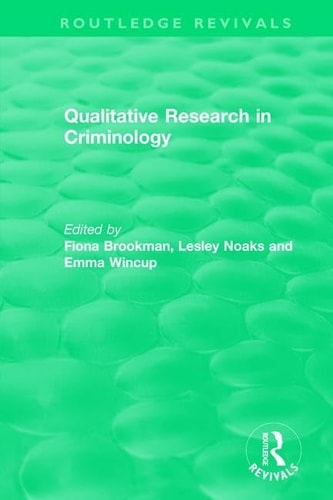
Qualitative Research in Criminology
0
0
As an Amazon Associate and affiliate partner, Menrva Books earns from qualifying purchases. Learn more
Author Description
Published in 1999, this text brings together detailed reflexive accounts of authors' experiences of conducting research on a variety of criminological topics. The broad aim of the book is to critically review how qualitative methods can be effectively deployed in the area of criminology. The conclusions reached in the text are diverse, reflecting the range of qualitative methods considered and the particular criminological topics to which they are applied. A common theme throughout is that whilst qualitative research can help to provide valid and meaningful information on criminological issues, researchers need to carefully reflect upon both the methodological and ethical dimensions of their work. The book will appeal to those who wish to understand the experience of conducting qualitative research on aspects of crime and criminal justice. This will include undergraduate and postgraduate students undertaking research for the first time, as well as experienced researchers and teachers. This book was originally published as part of the Cardiff Papers in Qualitative Research series edited by Paul Atkinson, Sara Delamont and Amanda Coffey. The series publishes original sociological research that reflects the tradition of qualitative and ethnographic inquiry developed at Cardiff. The series includes monographs reporting on empirical research, edited collections focussing on particular themes, and texts discussing methodological developments and issues.
Menrva's Summary
THE THESIS
This book critically reviews the effective deployment of qualitative methods within criminology, drawing on reflexive accounts of research experiences. The authors explore diverse conclusions stemming from various qualitative approaches applied to specific criminological topics. A central theme emphasizes that while qualitative research yields valid and meaningful data on crime and criminal justice issues, researchers must meticulously consider both the methodological and ethical dimensions of their work. The text is designed to appeal to both novice researchers and experienced academics seeking to understand the practicalities of conducting qualitative research in this field.
THE SCOPE MAP
- Reflexive accounts of authors' experiences conducting qualitative research on diverse criminological topics.
- Critical review of how qualitative methods can be effectively deployed in criminology.
- Exploration of diverse conclusions reflecting a range of qualitative methods and criminological applications.
- Discussion of the balance between providing valid and meaningful information and the need for methodological and ethical reflection.
- Insights for undergraduate and postgraduate students undertaking research for the first time.
- Guidance for experienced researchers and teachers in the field of criminology.
- Contextualization within the Cardiff Papers in Qualitative Research series, focusing on sociological inquiry and ethnographic methods.
THE AUTHORITY PERSPECTIVE
This book is presented as a valuable resource for understanding the practical application and ethical considerations of qualitative research in criminology. Its strength lies in the detailed reflexive accounts from authors who have conducted research across various topics, offering practical insights for both new and experienced researchers. The text aims to critically assess the effectiveness of qualitative methods in this field, highlighting the importance of careful methodological and ethical reflection. It is positioned as a key text for students and academics engaged with crime and criminal justice research.
Page Count:
194
Publication Date:
2020-01-14
Publisher:
Taylor & Francis
ISBN-10:
0815347995
ISBN-13:
9780815347996
Science
Non-Fiction
Sociology
Research Methods
Criminology
Qualitative Research
Community Tags
Other Editions(4)


Similar Books














Reader Comments
Share Your Thoughts
No comments yet. Be the first to share your thoughts!