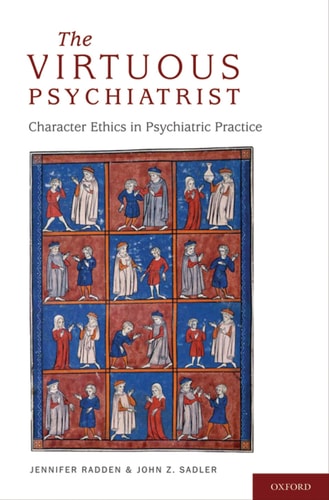
The Virtuous Psychiatrist: Character Ethics in Psychiatric Practice
0
0
As an Amazon Associate and affiliate partner, Menrva Books earns from qualifying purchases. Learn more
Author Description
The context for this interdisciplinary work by a philosopher and a clinician is the psychiatric care provided to those with severe mental disorders. Such a setting makes distinctive moral demands on the very character of the practitioner, it is shown, calling for special virtues and greater virtue than many other practice settings. In a practice so attentive to the patient's self identity, the authors promote a heightened awareness of cultural and particularly gender issues. By elucidating the nature of the moral psychology and character of the good psychiatrist, this work provides a sustained application of virtue theory to clinical practice. With its roots in Aristotelian writing, The Virtuous Psychiatrist presents virtue traits as habits, able to be cultivated and enhanced through training. The book describes these traits, and how they can be habituated in clinical training. A turn towards virtue theory within philosophy during the last several decades has resulted in important research on professional ethics. By approaching the ethics of psychiatric professionals in these virtue terms, Radden and Sadler's work provides an original application of this theorizing to practice. Of interest to both theorists and practitioners, the book explores the tension between the model of enduring character implicit in virtue theory and the segmented personae of role-specific moral responses. Clinical examples are provided, based upon dramaturgical vignettes (caseplays) which illustrate both the interactions of the case participants as well as the inner monologue of the clinician protagonist.
Menrva's Summary
THE THESIS
This book investigates how virtue ethics can be applied to the specific moral demands placed upon psychiatrists treating patients with severe mental disorders. The authors, a philosopher and a clinician, argue that psychiatric practice requires a unique set of character traits that go beyond standard professional codes. By utilizing an Aristotelian framework, they propose that these virtues are not innate but are habits that can be cultivated through intentional clinical training and reflection.
THE SCOPE MAP
What You Will Find
- Application of Aristotelian virtue theory to modern psychiatric practice
- Analysis of moral psychology in the context of patient self-identity
- Examination of cultural and gender-based ethical considerations
- Use of dramaturgical vignettes and caseplays to illustrate clinical dilemmas
Scope Limits
- The text focuses primarily on the psychiatric care of patients with severe mental disorders rather than general practice
- It does not provide a comprehensive history of all ethical theories in medicine
THE AUTHORITY PERSPECTIVE
Experts recognize this work as a significant interdisciplinary contribution that bridges the gap between philosophical theory and clinical application. Readers frequently note the academic density of the prose, which is intended for both professional practitioners and scholars of medical ethics.
Page Count:
250
Publication Date:
2010-01-01
Publisher:
Oxford University Press
ISBN-10:
0190452846
ISBN-13:
9780190452841
Philosophy
Medical
Mind & Body
Medical Ethics
Professional Ethics
Allied Health
Psychiatry
Community Tags
Similar Books