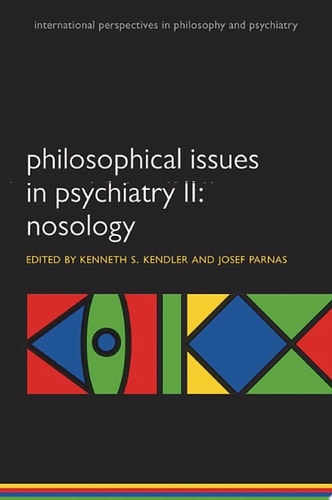
Philosophical Issues in Psychiatry II: Nosology
0
0
As an Amazon Associate and affiliate partner, Menrva Books earns from qualifying purchases. Learn more
Author Description
Psychiatric and psychological practice and research is critically dependent on diagnosis. Yet the nature of psychiatric diagnosis and the rules by which disorders should be created and organized have been highly controversial for over 100 years. Unlike simple medical disorders (like infectious diseases), psychiatric disorders cannot be traced to one simple etiologic agent. The last two generations have seen major conceptual shifts in the approach to diagnosis with the rise of operationalized criteria and an emphasis on a descriptive rather than etiological approach to diagnosis. The interest in psychiatric diagnoses is particularly heightened now because both of the major psychiatric classifications in the world - DSM and ICD - are now undergoing major revisions. What makes psychiatric nosology so interesting is that it sits at the intersection of philosophy, empirical psychiatric/psychological research, measurement theory, historical tradition and policy. This makes the field fertile for a conceptual analysis. This book brings together established experts in the wide range of disciplines that have an interest in psychiatric nosology. The contributors include philosophers, psychologists, psychiatrists, historians and representatives of the efforts of DSM-III, DSM-IV and DSM-V. Some of the questions addressed include i) what is the nature of psychiatric illness? Can it be clearly defined and if so how? ii) What is the impact of facts versus values in psychiatric classification? iii) How have concepts of psychiatric diagnosis changed over time? iv) How can we best conceptualize the central idea of diagnostic validity? And v) Can psychiatric classification be a cumulative enterprise seeking improvements at each iteration of the diagnostic manual? Each individual chapter is introduced by the editors and is followed by a commentary, resulting in a dynamic discussion about the nature of psychiatric disorders. This book will be valuable for psychiatrists, psychologists and
Menrva's Summary
THE THESIS
This volume investigates the conceptual, historical, and ethical foundations of psychiatric nosology to determine how diagnostic systems can be improved and validated. Editors Josef Parnas and Kenneth S. Kendler assemble a multidisciplinary group of philosophers, historians, and clinicians to analyze the limitations of current diagnostic manuals. By examining the intersection of empirical research and philosophical inquiry, the text argues that psychiatric classification requires a more rigorous conceptual framework than purely descriptive criteria can provide.
THE SCOPE MAP
What You Will Find
- Analysis of the evolution of DSM and ICD classification systems
- Philosophical inquiries into the nature of mental illness and diagnostic validity
- Debates regarding the influence of values versus empirical facts in clinical practice
- Commentary-driven chapters that facilitate cross-disciplinary dialogue
Scope Limits
- The text does not provide a clinical manual or diagnostic guide for practitioners
- It does not offer a singular, unified theory of psychiatric classification
THE AUTHORITY PERSPECTIVE
Experts recognize this work as a significant contribution to the philosophy of psychiatry, particularly for its focus on the epistemological challenges of classification. Readers frequently note the academic density of the prose, which is intended for professionals and scholars engaged in the theoretical underpinnings of mental health research.
Page Count:
349
Publication Date:
2012-01-01
Publisher:
OUP Oxford
ISBN-10:
0191625760
ISBN-13:
9780191625763
Psychology
Science
Non-Fiction
Philosophy
Medical
Medical Ethics
Psychiatry
Mind & Body
Allied Health
Community Tags
Other Editions(3)
Similar Books




Reader Comments
Share Your Thoughts
No comments yet. Be the first to share your thoughts!