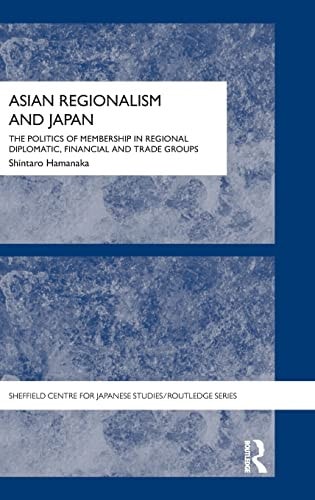
Asian Regionalism and Japan: The Politics of Membership in Regional Diplomatic, Financial, and Trade Groups
0
0
As an Amazon Associate and affiliate partner, Menrva Books earns from qualifying purchases. Learn more
Author Description
This Book Explores The Essential Nature Of Regionalism By Conducting A Comprehensive Analysis Of More Than 30 Regionalist Proposals Made By Japan And Other Asian Countries Throughout The Post-war Period. Shintaro Hamanaka Examines The Whole Post War Period And Covers All Regionalist Proposals Since Then, While Most Existing Studies Cover Only The Development Of Asian Regionalism In The Recent Decade. A Significant Number Of Cases In The Proposed Book Enable The Readers To Go Beyond An Understanding Of Each Regionalist Project, To A Deeper Understanding Of Theoretically Generalizeable Behavior Pattern Of Japan And Other Countries. The Book Also Comparatively Analyzes Political, Financial And Trade Regionalisms. The Central Aim Of The Book Is To Reveal The Fact That Policies With Regard To Regionalism Have A Pattern, In This Case With A Principal, Though Not An Exclusive Focus, On Japan. The Author Demonstrates That The Behavior Pattern Of External Policy Is Extremely Consistent In Terms Of The Membership Of Regionalist Organizations And Discusses Whether This New Approach To Regionalism Holds Explanatory Power Vis-a-vis Regionalism Outside Asia. This Book Will Be Of Interest To Scholars, Postgraduate Students And Policy Makers In The Fields Of International Relations, Asian Studies, International Trade And Regionalism.--jacket.
Menrva's Summary
THE THESIS
What underlying patterns dictate the membership and formation of regional diplomatic, financial, and trade organizations in Asia? Shintaro Hamanaka, an expert in international political economy, utilizes a comprehensive dataset of over 30 regionalist proposals from the post-war era to challenge the narrow focus of contemporary studies. By examining the consistency of Japanese foreign policy alongside other regional actors, the author constructs a theoretical framework to explain how and why states pursue specific regionalist projects.
THE SCOPE MAP
What You Will Find
- A longitudinal analysis of regionalist proposals spanning the entire post-war period.
- Comparative frameworks evaluating diplomatic, financial, and trade-based regionalism.
- Empirical evidence derived from over 30 distinct regionalist case studies.
- A theoretical model assessing the explanatory power of regional leadership and membership behavior patterns.
THE AUTHORITY PERSPECTIVE
Scholars and policy analysts recognize this work as a rigorous contribution to the study of Asian institutional development. The text is noted for its academic density and its systematic approach to categorizing regionalist behavior beyond recent historical trends.
Page Count:
234
Publication Date:
2009-01-01
Publisher:
Routledge
ISBN-10:
020386185X
ISBN-13:
9780203861851
Economics
International relations
International Trade
Asian Studies
Diplomacy
Regionalism
Community Tags
Similar Books