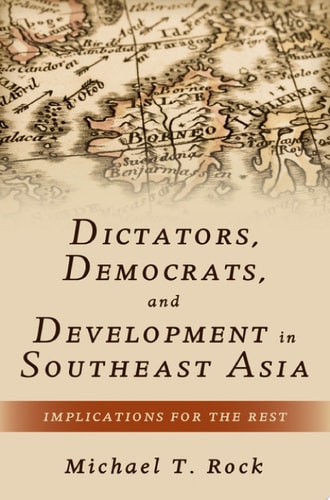
Dictators, Democrats, and Development in Southeast Asia
0
0
As an Amazon Associate and affiliate partner, Menrva Books earns from qualifying purchases. Learn more
Author Description
Getting Growth Going Has Been Rare In The Developing World-since 1960 Only Nine Developing Countries Have Succeeded In Sustaining High Growth. The Aim Of Dictators, Democrats And Development In Southeast Asia Is To Examine How Dictators And Democrats In Three Of The Nine Fast Growers -indonesia, Malaysia And Thailand, Hereafter Imt-built And Sustained Pro-growth Political Coalitions That Enabled Them To Adopt Policies That Ushered In Sustained High Growth. The Focus Is On Imt Because Circa 1960 Few Thought The Three Were Candidates For High Growth And Because The Three Have Factor Endowments, Ethnic Heterogeneity, And Forms Of Governance That Resemble The Rest. These Similarities Suggest The Rest May Have Much To Learn From Imt. The Focus Is Unabashedly On The Politics Of Development In Imt Because Dictators And Democrats In Imt Built And Sustained Pro-growth Political Coalitions That Enabled Them To Link Their Long Term Political Survival With Delivering Development. How And Why They Did So Should Be Of Keen Interest To The Rest. Because Dictators And Democrats In Imt Were Committed To Capitalist, Industrial And Open Economy Development Strategies But Deeply Suspicious Of A Laissez Faire Approach To Development, None Of The Three Ever Adopted A Washington Consensus Style Growth Strategy. While All Three Toyed With A Northeast Style Capitalist Developmental State Approach To Growth, Because Governments In Imt Lacked The Political Requisites To Make This Strategy Work, None Really Stuck To This Approach To Growth Either. Instead Dictators And Democrats In Imt Implemented Highly Pragmatic Growth And Development Strategies. When Markets Worked, Governments Used Them. When Interventions Worked Governments Relied On Them. When Either Failed To Deliver Expected Results, Governments Weeded Out Bad Investments To Sustain High Growth. Such A Pragmatic, Trial And Error Approach To Development Should Also Be Of Keen Interest To The Rest.
Menrva's Summary
THE THESIS
This book investigates the political mechanisms that allowed Indonesia, Malaysia, and Thailand to achieve and sustain high economic growth rates since 1960. Michael T. Rock, an expert in development economics, analyzes how political leaders in these nations constructed pro-growth coalitions to ensure their long-term survival. The work argues that these countries succeeded by rejecting both laissez-faire policies and rigid developmental state models in favor of a pragmatic, trial-and-error approach to economic intervention.
THE SCOPE MAP
What You Will Find
- Comparative analysis of economic policy in Indonesia, Malaysia, and Thailand.
- Examination of political coalition-building strategies.
- Evaluation of pragmatic state intervention versus market-based growth.
Scope Limits
- The study does not provide a comprehensive history of all developing nations.
- The analysis does not focus on the cultural or social history of the region outside of its impact on political economy.
THE AUTHORITY PERSPECTIVE
Scholars and policy analysts frequently cite this work for its clear-eyed assessment of how political stability influences economic outcomes in Southeast Asia. Experts note that the text provides a valuable alternative to standard Washington Consensus narratives by highlighting the role of pragmatic governance in emerging markets.
Page Count:
400
Publication Date:
2016-01-01
Publisher:
Oxford University Press
ISBN-10:
0190619872
ISBN-13:
9780190619879
Economics
International relations
Asian Studies
Community Tags
Other Editions(2)

Similar Books




Reader Comments
Share Your Thoughts
No comments yet. Be the first to share your thoughts!