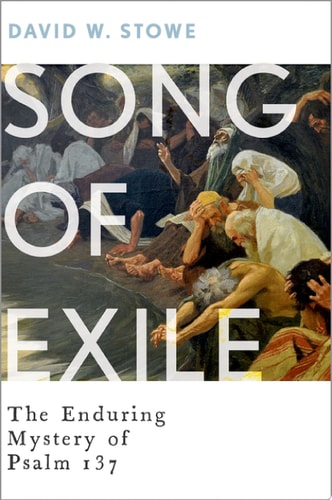
Song of Exile
0
0
As an Amazon Associate and affiliate partner, Menrva Books earns from qualifying purchases. Learn more
Author Description
Oft-referenced and frequently set to music, Psalm 137 - which begins by the rivers of Babylon, there we sat down, yea, we wept, when we remembered Zion - has become something of a cultural touchstone for music and Christianity across the Atlantic world. It has been a top single more than once in the 20th century, from Don McLean's haunting Anglo-American folk cover to Boney M's West Indian disco mix. In Song of Exile, David Stowe uses a wide-ranging, interdisciplinary approach that combines personal interviews, historical overview, and textual analysis to demonstrate the psalm's enduring place in popular culture. The line that begins Psalm 137 - one of the most lyrical of the Hebrew Bible - has been used since its genesis to evoke the grief and protest of exiled, displaced, or marginalized communities. Despite the psalm's popularity, little has been written about its reception during the more than 2,500 years since the Babylonian exile. Stowe locates its use in the American Revolution and the Civil Rights Movement, and internationally by anti-colonial Jamaican Rastafari and immigrants from Ireland, Korea, and Cuba. He studies musical references ranging from the Melodians' Rivers of Babylon to the score in Kazakh film Tulpan. Stowe concludes by exploring the presence and absence in modern culture of the often-ignored final words: Happy shall he be, that taketh and dasheth thy little ones against the stones. Usually excised from liturgy and forgotten by scholars, Stowe finds these words echoed in modern occurrences of genocide and ethnic cleansing, and more generally in the culture of vengeance that has existed in North America from the earliest conflicts with Native Americans. Based on numerous interviews with musicians, theologians, and writers, Stowe reconstructs the rich and varied reception history of this widely used, yet mysterious, text.
Menrva's Summary
THE THESIS
This book investigates the enduring cultural and theological influence of Psalm 137, tracing its transformation from an ancient lament of exile into a global touchstone for protest and identity. David W. Stowe, a scholar of American culture and music, employs an interdisciplinary framework to analyze how this specific biblical text has been interpreted and adapted across diverse historical and geographic contexts. By synthesizing textual analysis with contemporary interviews, the author argues that the psalm serves as a persistent vessel for expressing the grief and resistance of marginalized communities.
THE SCOPE MAP
What You Will Find
- A historical survey of Psalm 137 from the Babylonian exile to modern geopolitical conflicts.
- Analysis of musical adaptations ranging from folk and disco to international film scores.
- Examination of the psalm's role in the American Revolution, the Civil Rights Movement, and global anti-colonial struggles.
- Discussion of the often-omitted, violent final verses of the text and their connection to modern themes of vengeance and ethnic cleansing.
Scope Limits
- The text does not provide a comprehensive theological commentary on the entire Book of Psalms.
- The analysis focuses primarily on the reception history of the text rather than its original linguistic construction.
THE AUTHORITY PERSPECTIVE
Experts recognize this work as a significant contribution to the study of religious reception history and popular culture. Readers frequently note the academic rigor of the prose while appreciating the breadth of the author's interdisciplinary research.
Page Count:
224
Publication Date:
2016-01-01
Publisher:
Oxford University Press
ISBN-10:
0190466847
ISBN-13:
9780190466848
Religion
Western
Music
History
Sociology
Community Tags
Other Editions(2)
Similar Books




Reader Comments
Share Your Thoughts
No comments yet. Be the first to share your thoughts!