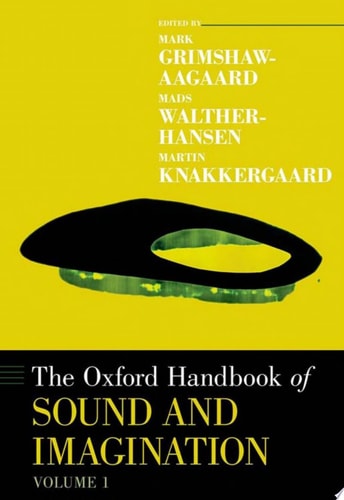
The Oxford Handbook of Sound and Imagination
0
0
As an Amazon Associate and affiliate partner, Menrva Books earns from qualifying purchases. Learn more
Author Description
Whether Social, Cultural, Or Individual, The Act Of Imagination Always Derives From A Pre-existing Context. For Example, We Can Conjure An Alien's Scream From Previously Heard Wildlife Recordings Or Mentally Rehearse A Piece Of Music While Waiting For A Train. This Process Is No Less True For The Role Of Imagination In Sonic Events And Artifacts. Many Existing Works On Sonic Imagination Tend To Discuss Musical Imagination Through Terms Like Compositional Creativity Or Performance Technique. In This Two-volume Handbook, Contributors Shift The Focus Of Imagination Away From The Visual By Addressing The Topic Of Sonic Imagination And Expanding The Field Beyond Musical Compositional Creativity And Performance Technique Into Other Aural Arenas Where The Imagination Holds Similar Power. Topics Covered Include Auditory Imagery And The Neurology Of Sonic Imagination; Aural Hallucination And Illusion; Use Of Metaphor In The Recording Studio; The Projection Of Acoustic Imagination In Architectural Design; And The Design Of Sound Artifacts For Cinema And Computer Games.
Menrva's Summary
THE THESIS
This handbook investigates the cognitive, cultural, and technical mechanisms through which human imagination constructs and interprets sonic experiences. The editors, Mads Walther-Hansen, Mark Grimshaw-Aagaard, and Martin Knakkergaard, assemble a multidisciplinary group of contributors to challenge the visual-centric bias in imagination studies. By synthesizing research from neurology, architecture, musicology, and media studies, the text argues that sonic imagination is a foundational element of human perception that extends far beyond traditional musical performance.
THE SCOPE MAP
What You Will Find
- Analysis of auditory imagery and the neurological basis of sound perception
- Examination of aural hallucinations and sensory illusions
- Methodologies for applying metaphor in recording studio environments
- Studies on the projection of acoustic imagination in architectural design
- Design frameworks for sound artifacts in cinema and interactive gaming
Scope Limits
- Does not focus on traditional musical composition or performance technique
- Does not provide a historical survey of music theory
THE AUTHORITY PERSPECTIVE
Experts identify this work as a significant contribution to the growing field of sound studies, particularly for its effort to decentralize visual paradigms in cognitive research. Readers frequently note the academic density of the prose, which is intended for scholars and advanced students within the humanities and sciences.
Page Count:
752
Publication Date:
2019-01-01
Publisher:
Oxford University Press
ISBN-10:
0190460172
ISBN-13:
9780190460174
Psychology
Sound Studies
Acoustics
Musicology
Philosophy of
Community Tags
Similar Books