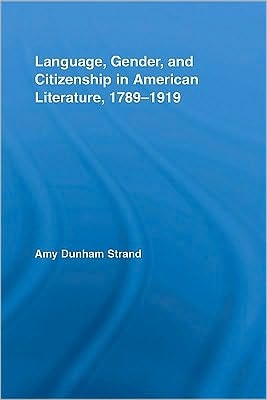
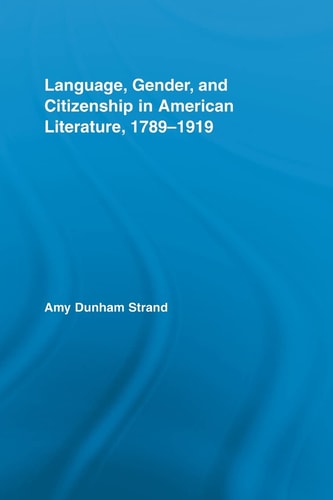
Language, Gender, and Citizenship in American Literature, 1789-1919
0
0
As an Amazon Associate and affiliate partner, Menrva Books earns from qualifying purchases. Learn more
Author Description
No description available.
Menrva's Summary
THE THESIS
This work investigates how the evolution of American literary language and rhetorical structures functioned to define, exclude, or empower specific groups within the framework of citizenship between 1789 and 1919. Amy Dunham Strand, a scholar of American literature and cultural history, utilizes a rigorous analytical framework to examine how canonical and non-canonical texts reflect the shifting political landscape of the United States. By analyzing the intersection of gendered discourse and legal definitions of belonging, the author argues that literature served as a primary site for negotiating the boundaries of the American public sphere. The text synthesizes historical documents with literary analysis to demonstrate how language shaped the lived experience of citizenship for women and marginalized populations.
THE SCOPE MAP
What You Will Find
- Analysis of American literary texts published between the early republic and the post-World War I era.
- Examination of the rhetorical strategies used to construct gendered identities in political and social discourse.
- Integration of historical legal frameworks regarding suffrage, naturalization, and civil rights.
- Exploration of how literary form influences the conceptualization of national belonging and civic participation.
THE AUTHORITY PERSPECTIVE
Scholars in the field of American studies frequently cite this text for its meticulous integration of political theory and literary analysis. Experts highlight the author's ability to bridge the gap between historical legal developments and the evolution of narrative styles in American prose.
Page Count:
261
Publication Date:
2008-01-01
Publisher:
Taylor & Francis Group
ISBN-10:
0203888529
ISBN-13:
9780203888520
Politics
History
Literary Criticism
Gender Studies
American
English philology
United States
Community Tags
Other Editions(3)
Similar Books