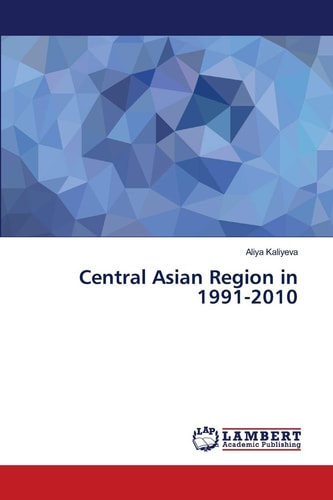
Central Asian Region in 1991-2010
0
0
As an Amazon Associate and affiliate partner, Menrva Books earns from qualifying purchases. Learn more
Author Description
After the Collapse of Soviet Union, Central Asia became one of the major topics in international politics. Because of its vast natural resources, attractive markets, geo-strategy and geopolitics, great powers have pursued both hegemonic and conflicting policies toward the region. This work focuses on geo-strategic importance of the region; examines policy of great powers and regional states as well as their attempts to weaken the efforts of other side; analyzes the concepts of Islam, nationalism, drug trafficking and security.
Menrva's Summary
THE THESIS
The collapse of the Soviet Union ushered in a new era of geopolitical competition in Central Asia, driven by the region's strategic importance and vast resources. This work examines the geo-strategic significance of Central Asia, analyzing the policies of great powers and regional states as they navigated a complex landscape of hegemonic ambitions and counter-efforts. It delves into the intertwined concepts of Islam, nationalism, drug trafficking, and security that shaped the region's trajectory between 1991 and 2010.
THE SCOPE MAP
- Analysis of the geo-strategic importance of the Central Asian region.
- Examination of policies pursued by great powers and regional states.
- Investigation into attempts by states to undermine rivals' efforts.
- Concepts of Islam, nationalism, and their influence on regional dynamics.
- Analysis of drug trafficking routes and their impact on security.
- Focus on the period between 1991 and 2010.
THE AUTHORITY PERSPECTIVE
The book addresses a critical period of geopolitical transition in Central Asia following the Soviet Union's dissolution. Its focus on the interplay of great power politics, regional statecraft, and internal dynamics like nationalism and Islam suggests a comprehensive overview for those interested in post-Soviet studies. The analysis of drug trafficking and security concerns highlights the complex challenges faced by the region. The work appears to offer a detailed examination of the region's strategic significance and the multifaceted policies that defined it.
Page Count:
56
Publication Date:
2018-12-04
Publisher:
LAP Lambert Academic Publishing
ISBN-10:
6139969956
ISBN-13:
9786139969951
Non-Fiction
Politics
History
International relations
Geopolitics
Community Tags
Similar Books