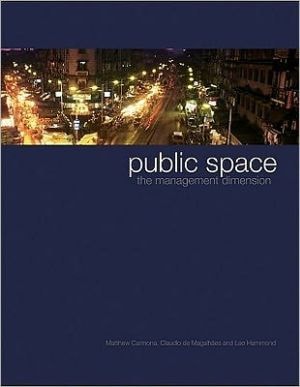
Public Space: The Management Dimension
0
0
As an Amazon Associate and affiliate partner, Menrva Books earns from qualifying purchases. Learn more
Author Description
In both the UK and the US there is a sense of dissatisfaction and pessimism about the state of urban environments, particularly with the quality of everyday public spaces. Explanations for this have emphasized the poor quality of design that characterizes many new public spaces; spaces that are dominated by parking, roads infrastructure, introspective buildings, a lack of enclosure and a poor sense of place, and which in different ways for different groups are too often exclusionary.Yet many well designed public spaces have also experienced decline and neglect, as the services and activities upon which the continuing quality of those spaces have been subject to the same constraints and pressures for change as public services in general. These issues touch upon the daily management of public space, that is, the coordination of the many different activities that constantly define and redefine the characteristics and quality of public space.This book draws on three empirical projects to examine the questions of public space management on an international stage. They are set within a context of theoretical debates about public space, its history, contemporary patterns of use and changing nature in western society, and about the new management approaches that are increasingly being adopted.
Menrva's Summary
THE THESIS
This book investigates the critical role of daily management in determining the quality, accessibility, and long-term viability of urban public spaces. The authors, Claudio de Magalhães, Leo Hammond, and Matthew Carmona, utilize their expertise in urban design and planning to argue that design alone is insufficient for creating successful environments. By synthesizing findings from three empirical research projects, they examine how administrative constraints, service coordination, and evolving social pressures dictate the functional reality of public spaces in Western societies.
THE SCOPE MAP
What You Will Find
- Comparative analysis of urban environments in the UK and the US.
- Theoretical frameworks regarding the historical evolution and contemporary usage of public space.
- Empirical data derived from three distinct research projects on management practices.
- Evaluation of new administrative approaches to maintaining public infrastructure and services.
THE AUTHORITY PERSPECTIVE
Experts in urban planning recognize this work as a foundational text for understanding the operational side of city design. Readers frequently note the academic density of the prose, which provides a rigorous examination of the intersection between policy and physical space.
Page Count:
232
Publication Date:
2008-01-01
Publisher:
Routledge
ISBN-10:
0203927222
ISBN-13:
9780203927229
Architecture
Sociology
Great Britain
Public Policy
Public Spaces
New York
Urban Design
urban planning