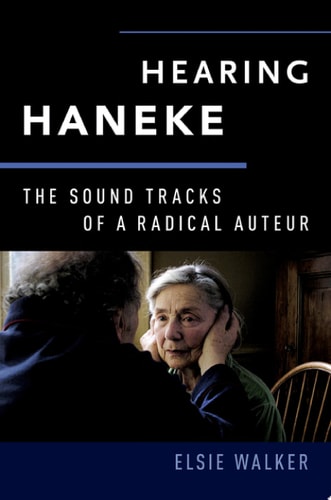
Hearing Haneke: The Sound Tracks of a Radical Auteur
0
0
As an Amazon Associate and affiliate partner, Menrva Books earns from qualifying purchases. Learn more
Author Description
Michael Haneke's films subject us to extreme experiences of disturbance, desperation, grief, and violence. They are unsoftened by music, punctuated by accosting noises, shaped by painful silences, and charged with aggressive dialogue. The sound tracks are even more traumatic to hear than his stories are to see, but they also offer us the transformative possibilities of reawakened sonic awareness. Haneke's use of sound redefines cinema in ways that can help us re-hear everything-including our own voices, and everything around us-better.Though Haneke's films make exceptional demands on us, he is among the most celebrated of living auteurs: he is two-time receipt of the Palme D'Or at Cannes Film Festival (for The White Ribbon (2009) and Amour (2012)), and Academy Award winner of Best Foreign Language Film (for Amour), along with numerous other awards. The radical confrontationality of his cinema makes him an internationally controversial, as well as revered, subject. Hearing Haneke is the first book-length study of the sound tracks that define this living legacy.This book explores the haunting, subversive, and political significance of all aural elements through Haneke's major feature films (dialogue, sound effects, silences, and music), all of which are meticulously conducted by him. Many critics read Haneke as coolly dispassionate about showing scenes of humanity under threat, but Hearing Haneke argues that all facets of his sound tracks stress humane understanding and the importance of compassion. This book provides exceptionally detailed analyses of all Haneke's most celebrated films: including The Seventh Continent, Funny Games, Code Unknown, The Piano Teacher, Caché, The White Ribbon, and Amour. The writing brings together film theory, musicology, history, and cultural studies in ways that resonate broadly. Hearing Haneke will matter to anyone who cares about the power of art to inspire progressive change.
Menrva's Summary
THE THESIS
This book investigates how Michael Haneke’s meticulous and often abrasive use of sound serves as a critical tool for fostering humane understanding and compassion in the viewer. Elsie M. Walker, a scholar of film and media, synthesizes film theory, musicology, and cultural history to argue that Haneke’s soundscapes are not merely dispassionate or traumatic, but are intentionally designed to provoke a transformative sonic awareness. By analyzing the interplay of silence, noise, and dialogue, the author demonstrates how Haneke’s auditory choices challenge audiences to re-evaluate their engagement with both cinematic narratives and the world around them.
THE SCOPE MAP
What You Will Find
- Detailed analysis of sound elements including dialogue, sound effects, silence, and music.
- A comprehensive examination of Haneke’s major feature filmography, from The Seventh Continent to Amour.
- An interdisciplinary framework combining film theory, musicology, and cultural studies.
Scope Limits
- The study focuses primarily on Haneke’s feature-length film work and does not extensively cover his early television productions or non-film media projects.
THE AUTHORITY PERSPECTIVE
Scholars and film critics recognize this work as the first comprehensive study dedicated to the aural dimensions of Haneke’s cinema. Readers frequently note the academic density of the prose, which effectively bridges the gap between technical musicology and broader film theory.
Page Count:
231
Publication Date:
2017-01-01
Publisher:
Oxford University Press
ISBN-10:
0190495936
ISBN-13:
9780190495930
Film Studies
Media Studies
Humanities
Auteur Theory
Cinema
Professional Career & Trade
Graphic ArtsCommunicationsDesign
Motion pictures
Musicology
Community Tags
Other Editions(2)
Similar Books




Reader Comments
Share Your Thoughts
No comments yet. Be the first to share your thoughts!