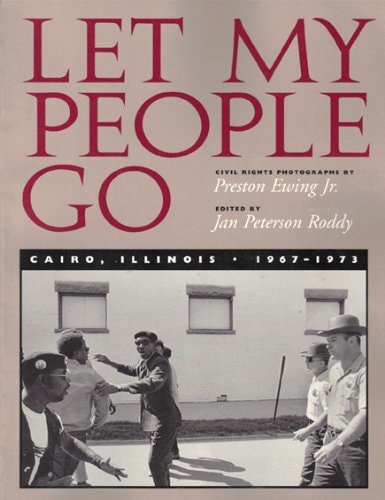
Let My People Go: Cairo, Illinois, 1967-1973
0
0
As an Amazon Associate and affiliate partner, Menrva Books earns from qualifying purchases. Learn more
Author Description
When a young black soldier at home on leave was found hanged in a Cairo, Illinois, police station in 1967, the black and white populations of this southern Illinois river city clashed violently, and the fury, once ignited, raged on for seven years. Jan Peterson Roddy has brought together the photographs of Preston Ewing Jr. with a wealth of collateral materials to document these turbulent years of racial strife. At the core of this book and providing its essential vitality are 110 black-and-white photographs by Ewing, who at the time this struggle began was the local NAACP president in Cairo. Excerpts from oral histories place Ewing’s images in context and fill in the details of the story. Interspersed news clippings, newspaper headlines, and public announcements and documents help re-create a sense of what it was like to live in Cairo at the time. Essays by Marva Nelson and Cherise Smith put the attitudes, events, and images of Cairo in a national context and examine photography’s privileged position in presenting and preserving history. The clash in Cairo serves as a microcosm of the national civil rights struggle in the late 1960s. Let My People Go provides the faces and voices of the movement. Sensational photographs of furious confrontation highlight some of these pages, but this pictorial and narrative account of Cairo’s story also shows that this was a multifaceted struggle involving, among other things, great persistence. The story of Cairo is compelling. It is unique even as it illustrates the common American theme of ordinary people grappling for justice. The perspective is that of a black community that lived through this struggle and wants its story told. It is a story told through an uncommon blend of documentation, human recollection, and analysis.
Menrva's Summary
THE THESIS
The hanging death of a young black soldier in a Cairo, Illinois, police station in 1967 ignited a violent, seven-year clash between the city's black and white populations. This book documents the turbulent years of racial strife in Cairo, a southern Illinois river city, through a combination of photographs, oral histories, news clippings, and public documents. The narrative centers on the photographs of Preston Ewing Jr., the local NAACP president at the time, which capture the fury of the confrontations and the persistence of the struggle for justice. Essays by Marva Nelson and Cherise Smith place Cairo's events within a national context, examining the role of photography in preserving history and illustrating how this microcosm reflects the broader American civil rights struggle.
THE SCOPE MAP
- 110 black-and-white photographs by Preston Ewing Jr., documenting racial strife in Cairo, Illinois.
- Excerpts from oral histories providing context and details of the events.
- Interspersed news clippings, newspaper headlines, public announcements, and documents from the period.
- Essays by Marva Nelson and Cherise Smith analyzing the events in a national context.
- A focus on the perspective of the black community that lived through the struggle.
- An examination of the multifaceted nature of the struggle, including persistence and the fight for justice.
THE AUTHORITY PERSPECTIVE
The book is presented as a compelling and unique account of the struggle for justice in Cairo, Illinois, illustrating a common American theme through the lens of a specific community's experience. The blend of documentation, human recollection, and analysis aims to tell the story from the perspective of the black community that lived through it. The inclusion of sensational photographs of confrontation alongside evidence of great persistence highlights the multifaceted nature of this historical event. The work is positioned as a significant contribution to understanding the civil rights movement through its detailed portrayal of local events and their national implications.
Page Count:
128
Publication Date:
1996-12-01
Publisher:
Southern Illinois University Press
ISBN-10:
0809320851
ISBN-13:
9780809320851
Photography
History
Non-Fiction
Civil Rights
Social History
Community Tags
Similar Books