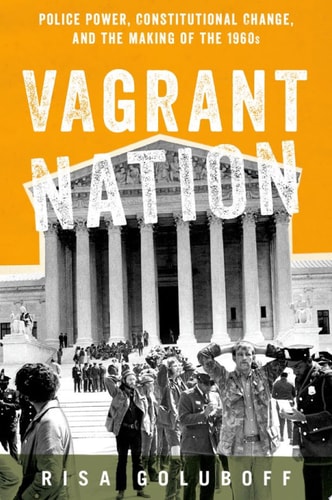
Vagrant Nation: Police Power, Constitutional Change, and the Making of the 1960s
0
0
As an Amazon Associate and affiliate partner, Menrva Books earns from qualifying purchases. Learn more
Author Description
In 1950s America, it was remarkably easy for police to arrest almost anyone for almost any reason. The criminal justice system-and especially the age-old law of vagrancy-served not only to maintain safety and order but also to enforce conventional standards of morality and propriety. A person could be arrested for sporting a beard, making a speech, or working too little. Yet by the end of the 1960s, vagrancy laws were discredited and American society was fundamentally transformed. What happened? In Vagrant Nation, Risa Goluboff answers that question by showing how constitutional challenges to vagrancy laws shaped the multiple movements that made "the 1960s." Vagrancy laws were so broad and flexible that they made it possible for the police to arrest anyone out of place: Beats and hippies; Communists and Vietnam War protestors; racial minorities and civil rights activists; gays, single women, and prostitutes. As hundreds of these "vagrants" and their lawyers challenged vagrancy laws in court, the laws became a flashpoint for debates about radically different visions of order and freedom. Goluboff's compelling account of those challenges rewrites the history of the civil rights, peace, gay rights, welfare rights, sexual, and cultural revolutions. As Goluboff links the human stories of those arrested to the great controversies of the time, she makes coherent an era that often seems chaotic. She also powerfully demonstrates how ordinary people, with the help of lawyers and judges, can change the meaning of the Constitution. The Supreme Court's 1972 decision declaring vagrancy laws unconstitutional continues to shape conflicts between police power and constitutional rights, including clashes over stop-and-frisk, homelessness, sexual freedom, and public protests. Since the downfall of vagrancy law, battles over what, if anything, should replace it, like battles over the legacy of the sixties transformations themselves, are far from over.
Menrva's Summary
THE THESIS
How did the widespread use of vagrancy laws in the 1950s evolve into the constitutional challenges that defined the social and political landscape of the 1960s? Risa Goluboff, a legal historian and professor, examines the intersection of police power and individual rights during a period of intense cultural transition. She argues that the legal dismantling of these broad, morality-based statutes served as a catalyst for the various civil rights and social movements that characterized the decade.
THE SCOPE MAP
What You Will Find
- Analysis of 1950s police practices and the application of vagrancy statutes.
- Legal history of constitutional challenges brought by activists, protesters, and marginalized groups.
- Examination of the Supreme Court's 1972 ruling on vagrancy laws.
- Case studies involving Beats, hippies, civil rights activists, and LGBTQ individuals.
Scope Limits
- The text does not provide a comprehensive history of all 1960s social movements, focusing primarily on those connected to vagrancy litigation.
- It does not offer a detailed analysis of modern post-1972 criminal justice policy beyond its immediate constitutional legacy.
THE AUTHORITY PERSPECTIVE
Legal scholars and historians frequently cite this work for its meticulous archival research and its ability to connect granular legal history to broader social change. Readers often note that the prose is accessible to non-specialists while maintaining the academic rigor expected of a university press publication.
Page Count:
479
Publication Date:
2016-01-01
Publisher:
Oxford University Press
ISBN-10:
0190262273
ISBN-13:
9780190262273
History
Civil Rights
Vagrancy
Law
Constitutional Law
American History
Social History
1960s Studies
Professional Career & Trade
Legal History
Special Topics
Community Tags
Similar Books