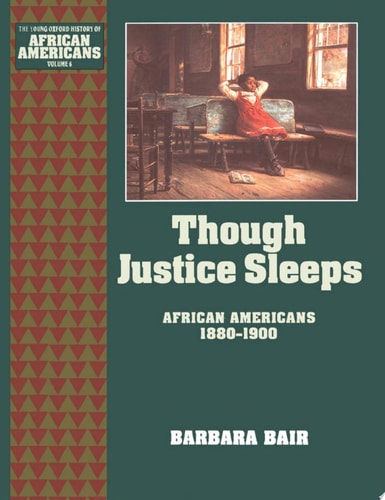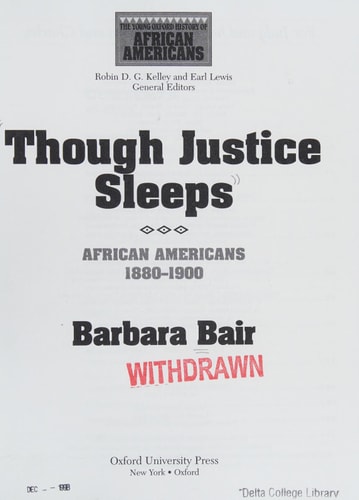
Though Justice Sleeps: African Americans 1880-1900
0
0
As an Amazon Associate and affiliate partner, Menrva Books earns from qualifying purchases. Learn more
Author Description
The period of Reconstruction that followed the end of the Civil War was a time of both tremendous promise and the deep conflict of ideas. At stake was the question of what the racial future of America would be. In the years between 1880 and 1900, the wonderful promise of a future of freedom that was made to black people by emancipation was broken. It was a promise that African Americans could conduct their daily lives with the assurance that their rights would be protected--the assurance of wide-awake and diligent social justice. Instead, justice slept.African Americans did, however, make their own brand of liberty through their activism and their faith. When John Solomon Lewis's family claimed their own land in Kansas, or Bishop Henry McNeal Turner encouraged African Americans to take pride in Africa, the flame of freedom was maintained. When Richard L. Davis organized mineworkers, or black women in New Orleans marched in the streets in support of striking dockworkers, they kindled the light of freedom that illuminated their path. When Booker T. Washington arrived in Tuskegee, Alabama, and started a school in Johanna Bowen Rudgrey's church, that light was further kindled.The message that African-American activists of the 1880s and 1890s left for those in the 20th century was a clear one. Frances Harper said it at the Chicago Women's Congress in 1893: "Demand justice, simple justice, as the right of every race." In Though Justice Sleeps, Barbara Bair demonstrates that black people were more than victims of Jim Crow laws and racial violence. She shows that they organized, fought back, moved around, thought, wrote, and created works of art. They connected their struggles with the rest of the world, turning to Africa, Europe, and the Caribbean for guidance and inspiration.
Menrva's Summary
THE THESIS
This book investigates how African Americans navigated the systemic erosion of civil rights and the rise of Jim Crow laws during the period between 1880 and 1900. Barbara Bair, a historian specializing in African American studies, utilizes primary source documents and historical narratives to challenge the perception of black citizens as passive victims. She argues that this era was defined by active resistance, intellectual development, and the pursuit of self-determination through labor organization, education, and global political engagement.
THE SCOPE MAP
What You Will Find
- Analysis of the transition from Reconstruction-era promises to the institutionalization of racial segregation.
- Documentation of grassroots activism, including labor organizing and the establishment of educational institutions.
- Examination of the intellectual and cultural contributions of figures such as Booker T. Washington and Frances Harper.
- Exploration of the transnational connections between African Americans and global movements in Africa, Europe, and the Caribbean.
THE AUTHORITY PERSPECTIVE
Historians and educators frequently cite this work as a valuable resource for understanding the complexities of post-Reconstruction American society. The text is noted for its accessible prose, making it a standard reference for students and researchers seeking a nuanced view of late 19th-century racial dynamics.
Page Count:
144
Publication Date:
1997-04-03
Publisher:
Oxford University Press
ISBN-10:
0195093437
ISBN-13:
9780195093438
History
Social History
Civil Rights
Blacks history