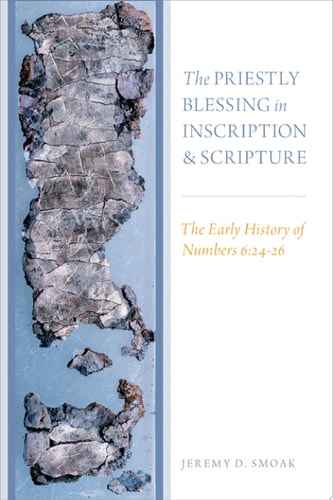
The Priestly Blessing in Inscription and Scripture: The Early History of Numbers 6:24-26
0
0
As an Amazon Associate and affiliate partner, Menrva Books earns from qualifying purchases. Learn more
Author Description
The Priestly Blessing found in Numbers 6:24-26 left a deep imprint upon Jewish and Christian religious practice and tradition. The various ways in which the blessing was incorporated into these liturgical traditions, for example, are well documented in a variety of written sources from the past two thousand years. Rabbinic literature demonstrates that the blessing held a central place in early Jewish traditions, especially as part of the development of the Amidah and other liturgical prayers. Christian tradition also attests to a rich diversity of applications of the blessing in Byzantine and Medieval Christian practice. While the Priestly Blessing's development and significance in Judaism and early Christianity are well documented, considerably less is known about its earliest history in the ancient world.The Priestly Blessing in Inscription and Scripture breaks new ground in the study of the origins and early history of the blessing by examining its appearance on two Iron Age amulets discovered at the site of Ketef Hinnom in Jerusalem. Jeremy Smoak provides a comprehensive description of the two amulets and compares the inscriptions on their surfaces with several Phoenician and Punic inscribed amulets. He argues that the blessing's language originated within a wider tradition of protective words, which were often inscribed on metal amulets as protection against evil. He contends that the Priestly writers of the biblical texts incorporated the specific words into the blessing's formulations precisely due to their wide popularity and appeal as protective words in the eastern Mediterranean world. Smoak's argument represents an important departure from earlier studies on the background of the blessing's language in the ancient Near East, and it sheds significant new light on the history of their use within early Judaism and Christianity.
Menrva's Summary
THE THESIS
This book investigates the origins and early historical development of the Priestly Blessing found in Numbers 6:24-26 by analyzing its presence on Iron Age amulets. Jeremy D. Smoak, a scholar of the ancient Near East, utilizes archaeological evidence from the Ketef Hinnom site to challenge traditional understandings of the blessing's provenance. He argues that the biblical formulation emerged from a broader Mediterranean tradition of protective inscriptions, suggesting that the Priestly writers adopted these phrases due to their established cultural resonance as apotropaic devices.
THE SCOPE MAP
What You Will Find
- Detailed analysis of the Ketef Hinnom silver amulets.
- Comparative study of Phoenician and Punic inscribed metal amulets.
- Examination of the transition of protective language from material culture into biblical scripture.
Scope Limits
- The text does not provide an exhaustive history of the blessing's liturgical use in later Rabbinic or Medieval Christian traditions.
- It focuses primarily on the Iron Age origins rather than the theological evolution of the blessing in post-biblical centuries.
THE AUTHORITY PERSPECTIVE
Scholars recognize this work as a significant contribution to the study of ancient Israelite religion and the material culture of the Levant. Readers frequently note the academic density of the prose and the author's meticulous attention to epigraphic detail.
Page Count:
262
Publication Date:
2015-01-01
Publisher:
Oxford University Press
ISBN-10:
0190493909
ISBN-13:
9780190493905
Religion
Amulets
Theology
Archaeology
Bibles
Ancient History
Near Eastern Studies
Community Tags
Similar Books