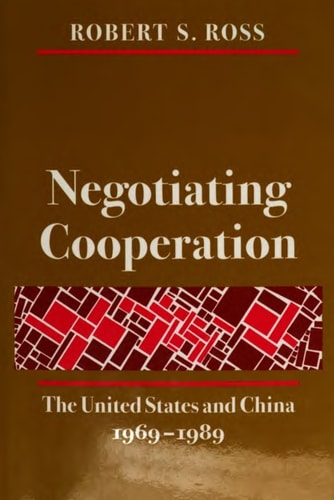
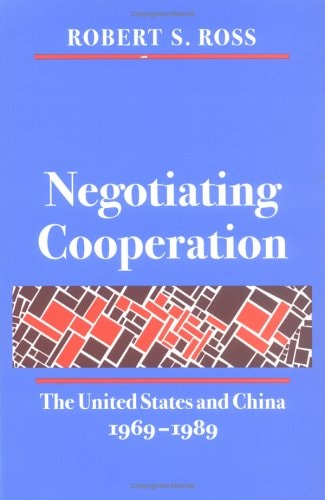
Negotiating Cooperation: The United States and China, 1969-1989
0
0
As an Amazon Associate and affiliate partner, Menrva Books earns from qualifying purchases. Learn more
Author Description
In the 1970s and 1980s the United States and China developed cooperative relations to enhance security against the USSR. Conventional wisdom claims Washington and Beijing agreed to 'shelve' conflictual issues; where conflict occurred, diplomatic error or domestic politics are blamed. This book shows, however, that US-China cooperation was fragile precisely because of ongoing conflicts, notably that over Taiwan. The author disputes Kissinger's claim that only he and Nixon understood Taiwan's unimportance. China never found the US stance on Taiwan acceptable, and the issue required constant attention. The book shows how the two powers built cooperative relations despite Taiwan. It explains how negotiations were conducted, and why the two powers at times compromised and at times accepted the status quo. It examines why relations on occasion became acrimonious and why the acrimony subsided.
Menrva's Summary
THE THESIS
This book investigates how the United States and China managed to build cooperative security relations in the 1970s and 1980s, despite persistent conflicts, particularly over Taiwan. Robert S. Ross, a scholar of international relations, examines the complex dynamics between the two powers, challenging the notion that they simply set aside their differences. The book analyzes the negotiation processes, the reasons for compromise or maintaining the status quo, and the factors that led to periods of acrimony and subsequent de-escalation, drawing on historical evidence to explain the fragility and resilience of their cooperation.
THE SCOPE MAP
- Analysis of US-China security cooperation against the USSR in the 1970s and 1980s.
- Examination of the ongoing conflict over Taiwan and its impact on bilateral relations.
- Rebuttal of the conventional wisdom that conflictual issues were 'shelved'.
- Explanation of negotiation strategies, compromises, and status quo acceptance.
- Analysis of the causes and resolutions of acrimony in US-China relations.
- Discussion of diplomatic errors and domestic politics as factors in conflict.
THE AUTHORITY PERSPECTIVE
The book is recognized for its detailed examination of the complex US-China relationship during a critical period of the Cold War. It challenges prevailing historical interpretations by highlighting the persistent role of conflict, especially concerning Taiwan, in shaping cooperative efforts. The work is noted for its analytical approach to negotiation and diplomacy, explaining the ebb and flow of relations between the two superpowers. It provides a nuanced perspective on how security interests and territorial disputes interacted to define the strategic partnership.
Page Count:
364
Publication Date:
1997-05-01
Publisher:
Stanford University Press
ISBN-10:
0804764646
ISBN-13:
9780804764643
Non-Fiction
History
International relations
Diplomacy
Community Tags
Other Editions(2)
Similar Books