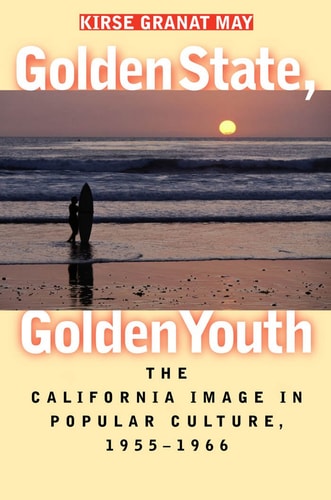
Golden State, Golden Youth: The California Image in Popular Culture, 1955-1966
0
0
As an Amazon Associate and affiliate partner, Menrva Books earns from qualifying purchases. Learn more
Author Description
Seen as a land of sunshine and opportunity, the Golden State was a mecca for the post-World War II generation, and dreams of the California good life came to dominate the imagination of many Americans in the 1950s and 1960s. Nowhere was this more evident than in the explosion of California youth images in popular culture. Disneyland, television shows such as The Mickey Mouse Club, Gidget and other beach movies, the music of the Beach Boys--all these broadcast nationwide a lifestyle of carefree, wholesome fun supposedly enjoyed by white, middle-class, suburban young people in California. Tracing the rise of the California teen as a national icon, Kirse May shows how idealized images of a suburban youth culture soothed the nation's postwar nerves while denying racial and urban realities. Unsettling challenges to this mass-mediated picture began to arise in the mid-1960s, however, with the Free Speech Movement's campus revolt in Berkeley and race riots in Watts. In his 1966 campaign for the governorship of California, Ronald Reagan transformed the backlash against the "dangerous" youths who fueled these actions into political triumph. As May notes, Reagan's victory presaged a rising conservatism across the nation.
Menrva's Summary
THE THESIS
This book investigates how the idealized image of California youth in popular culture during the 1955-1966 period both reflected and shaped American national identity. Kirse Granat May examines the pervasive cultural output, including Disneyland, television shows like 'The Mickey Mouse Club,' beach movies, and the music of the Beach Boys, which collectively broadcast a carefree, wholesome image of white, middle-class, suburban Californian youth nationwide. The author demonstrates how this idealized vision served to soothe postwar anxieties while simultaneously obscuring significant racial and urban realities. The narrative then explores the emergence of challenges to this mediated picture in the mid-1960s, marked by events such as the Free Speech Movement and the Watts riots, and concludes by analyzing how Ronald Reagan leveraged the backlash against these youth movements into political success, foreshadowing a broader national conservative shift.
THE SCOPE MAP
- Analysis of the construction and dissemination of the 'California good life' image in post-WWII American imagination.
- Exploration of key cultural artifacts: Disneyland, 'The Mickey Mouse Club,' Gidget films, and the music of the Beach Boys.
- Examination of the portrayal of white, middle-class, suburban youth as national icons.
- Discussion of how these idealized images masked underlying racial and urban inequalities.
- Investigation of the mid-1960s challenges to the dominant youth culture narrative, including the Free Speech Movement and the Watts riots.
- Analysis of Ronald Reagan's political use of public reaction to youth activism in his 1966 gubernatorial campaign.
- Contextualization of California's cultural influence within the broader rise of national conservatism.
THE AUTHORITY PERSPECTIVE
The book is recognized for its detailed examination of how popular culture in the mid-20th century constructed and disseminated an idealized image of California youth. It is noted for its analysis of how this image served a national purpose in soothing postwar anxieties, while critically assessing its failure to acknowledge racial and urban realities. The work is also credited with tracing the shift from this idealized portrayal to the challenges posed by social movements and political realignments of the era. The author's focus on the intersection of media, youth culture, and political conservatism provides a nuanced perspective on a pivotal decade in American history.
Page Count:
256
Publication Date:
2002-04-29
Publisher:
The University of North Carolina Press
ISBN-10:
0807826952
ISBN-13:
9780807826959
History
Non-Fiction
American Studies
Youth Culture
Postwar America
Media Studies
Cultural History
Community Tags
Similar Books