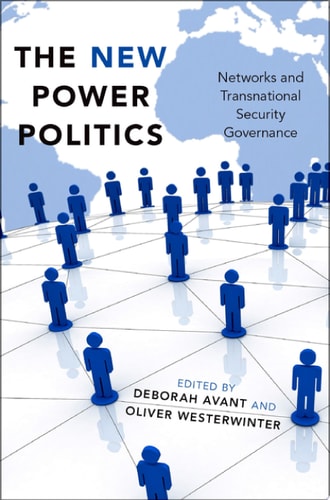
The New Power Politics: Networks and Transnational Security Governance
0
0
As an Amazon Associate and affiliate partner, Menrva Books earns from qualifying purchases. Learn more
Author Description
Traditional analyses of global security cannot explain the degree to which there is "governance" of important security issues -- from combatting piracy to curtailing nuclear proliferation to reducing the contributions of extractive industries to violence and conflict. They are even less able to explain why contemporary governance schemes involve the various actors and take the many forms they do.Juxtaposing the insights of scholars writing about new modes of governance with the logic of network theory, The New Power Politics offers a framework for understanding contemporary security governance and its variation. The framework rests on a fresh view of power and how it works in global politics. Though power is integral to governance, it is something that emerges from, and depends on, relationships. Thus, power is dynamic; it is something that governors must continually cultivate with a wide range of consequential global players, and how a governor uses power in one situation can have consequences for her future relationships, and thus, future power.Understanding this new power politics is crucial for explaining and shaping the future of global security politics. This stellar group of scholars analyzes both the networking strategies of would-be governors and their impacts on the effectiveness of governance and whether it reflects broad or narrow concerns on a wide range of contemporary governance issues.
Menrva's Summary
THE THESIS
This book investigates how contemporary global security governance functions by analyzing the role of networks and relational power. The authors, Deborah Avant and Oliver Westerwinter, synthesize insights from governance scholarship and network theory to propose a framework that treats power as a dynamic, relationship-dependent phenomenon. They argue that understanding these networking strategies is necessary to explain the effectiveness and inclusivity of modern security governance schemes.
THE SCOPE MAP
What You Will Find
- A theoretical framework for analyzing power as a product of social and political relationships
- Analysis of networking strategies employed by diverse global actors
- Case studies covering issues such as piracy, nuclear proliferation, and extractive industries
Scope Limits
- The text does not provide a comprehensive history of all international security institutions
- It does not offer prescriptive policy solutions for every specific security conflict
THE AUTHORITY PERSPECTIVE
Experts identify this work as a significant contribution to the study of transnational governance and network theory in international relations. Readers frequently note the academic density of the prose, which is intended for scholars and advanced students of global politics.
Page Count:
321
Publication Date:
2016-01-01
Publisher:
Oxford University Press
ISBN-10:
0190604522
ISBN-13:
9780190604523
Network Theory
International Security
Governance
International relations