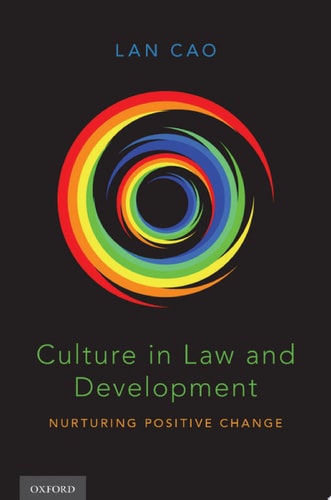
Culture in Law and Development: Nurturing Positive Change
0
0
As an Amazon Associate and affiliate partner, Menrva Books earns from qualifying purchases. Learn more
Author Description
The growth of international law in the post-World War II era stemmed partly from the belief that universal norms would make life for the entire world's population safer, more equitable, and more conducive to each person's acquisition of basic material needs. Starting in the sixties and seventies, some scholars and activists challenged this assumption and established the school of "cultural relativism," a model that pays deference to local cultural traditions and favors them over international human rights norms. Scholars tried to create and practice a middle-ground approach between universalism and relativism, whereby the most egregious violations would be prevented through assimilating only jus cogens norms into indigenous groups' existing cultural traditions. Such efforts at combining a few select international norms with local cultural traditions largely failed. Culture in Law and Development presents a provocative new solution to the seemingly intractable problem of combining international norms with local cultural traditions by changing culture through law and development. In this book, Lan Cao demonstrates how the gradual expansion of customary international law (CIL) provides a model for changing culture in ways that protect and advance local populations. The book adopts a holistic view of development and argues that cultural norms that impede the human capabilities of the poor, women, and other marginal groups should be changed. The book reveals how a more conscious, coordinated effort on such change can succeed while non-violative local traditions are otherwise honored and preserved. Cao proposes that cultural change does not have to constitute cultural disrespect, and that local societies only benefit by a careful combination of externally wrought change and internally fostered tradition.
Menrva's Summary
THE THESIS
How can international law and development initiatives effectively reconcile universal human rights norms with local cultural traditions? Lan Cao, a professor of law, examines the historical tension between universalism and cultural relativism. She argues that customary international law (CIL) offers a viable framework for fostering positive cultural change that protects marginalized populations without necessitating the abandonment of non-violative local customs.
THE SCOPE MAP
What You Will Find
- Analysis of the evolution of international law post-World War II
- Evaluation of cultural relativism versus universal human rights norms
- Proposed methodology for integrating CIL into local development strategies
Scope Limits
- Does not provide a comprehensive history of every international legal treaty
- Does not offer a universal blueprint for all cultural contexts
THE AUTHORITY PERSPECTIVE
Experts recognize this work as a significant contribution to the discourse on international development and legal pluralism. Readers frequently note the academic density of the prose and the author's nuanced approach to balancing external legal influence with internal cultural preservation.
Page Count:
552
Publication Date:
2016-01-01
Publisher:
Oxford University Press
ISBN-10:
0190608218
ISBN-13:
9780190608217
International relations
Law
Human rights
Sociology
Professional Career & Trade
Community Tags
Similar Books