
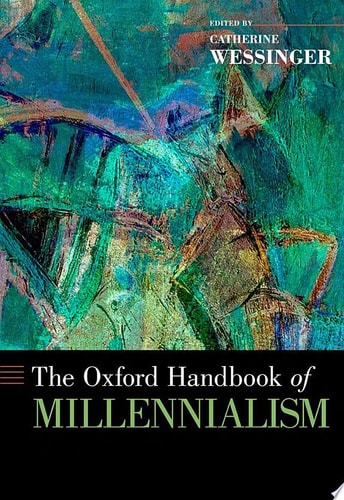
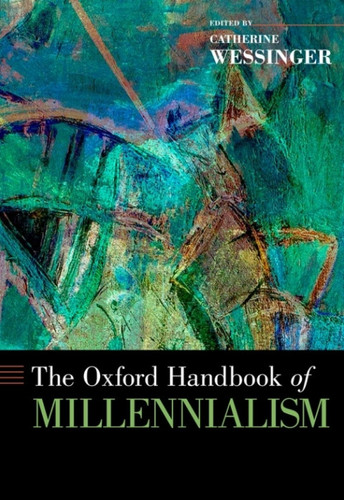
The Oxford Handbook of Millennialism
0
0
As an Amazon Associate and affiliate partner, Menrva Books earns from qualifying purchases. Learn more
Author Description
Christian Dispensationalism, the Taiping Revolution, cargo cults in Oceania, the Baha'i Faith, and the Raelian Movement would seem to have little in common. What they share, however, is a millennial orientation--the audacious human hope for a collective salvation, which may be heavenly or earthly or both. Although many religions feature a belief in personal salvation, millennial faiths are characterized by the expectation that salvation will be accomplished for an entire group by a superhuman agent, with or without human collaboration. The Oxford Handbook of Millennialism offers readers an in-depth look at both the theoretical underpinnings of the study of millennialism and its many manifestations across history and cultures.While the term "millennialism" is drawn from Christianity, it is a category that is used to study religious expressions in diverse cultures, religious traditions, and historical periods. Sometimes, millennial expectations are expressed in peaceful ways. Other times, millennialists become involved in violence.The Oxford Handbook of Millennialism begins with a section that examines four primary types of millennialism. Chapters in the next section examine key issues such as charismatic leadership, use of scripture, prophetic failure, gender roles, children, tension with society, and violence. The rest of the book explores millennialism in a wide variety of places and times, from ancient Near Eastern movements to contemporary apocalyptic and new age movements, including the roles played by millennialism in national and international conflicts. This handbook will be a valuable resource for scholars of religious studies, sociology, psychology, history, and new religious movements.
Menrva's Summary
THE THESIS
This volume investigates the theoretical foundations and diverse historical manifestations of millennialism as a global religious phenomenon. Catherine Wessinger, a scholar specializing in new religious movements, compiles contributions from various experts to analyze how different cultures and eras conceptualize collective salvation. The text argues that while the term originates in Christian theology, it serves as a critical analytical category for understanding religious movements that anticipate salvation for an entire group through a superhuman agent.
THE SCOPE MAP
What You Will Find
- Theoretical frameworks for classifying millennial movements into four primary types.
- Analysis of recurring themes including charismatic leadership, prophetic failure, and gender roles.
- Examination of the intersection between millennial belief systems and societal violence.
- Case studies ranging from ancient Near Eastern movements to contemporary New Age groups.
Scope Limits
- The text focuses primarily on religious and sociological perspectives rather than theological validation of specific beliefs.
- It does not provide an exhaustive catalog of every minor millennial sect in existence.
THE AUTHORITY PERSPECTIVE
Scholars and students of religious studies frequently cite this handbook as a comprehensive reference for understanding the complexities of apocalyptic and millennial movements. The prose is noted for its academic rigor and its utility in bridging the gap between historical analysis and contemporary sociological study.
Page Count:
768
Publication Date:
2016-07-01
Publisher:
Oxford University Press
ISBN-10:
0190611944
ISBN-13:
9780190611941
Religion
History
Sociology of Religion
Millennialism
Apocalyptic Studies
Community Tags
Other Editions(4)

Similar Books



Reader Comments
Share Your Thoughts
No comments yet. Be the first to share your thoughts!