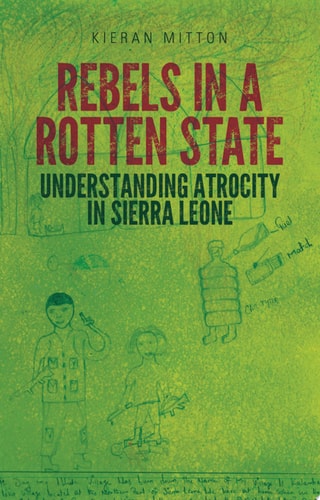
Rebels in a Rotten State
0
0
As an Amazon Associate and affiliate partner, Menrva Books earns from qualifying purchases. Learn more
Author Description
The Atrocities Of Civil Wars Present Us With Many Difficult Questions. How Do Seemingly Ordinary Individuals Come To Commit Such Extraordinary Acts Of Cruelty, Often Against Unarmed Civilians? Can We Ever Truly Understand Such Acts Of 'evil'? Based On A Wealth Of Original Interviews With Perpetrators Of Violence In Sierra Leone's Civil War, This Book Provides A Detailed Response. Moving Beyond The Rigid Bounds Of Political Science, The Author Engages With Sociology, Psychology And Social Psychology, To Provide A Comprehensive Picture Of The Complex Individual Motives Behind Seemingly Senseless Violence In Sierra Leone's War. Highlighting The Inadequacy Of Current Explanations That Centre On The Anarchic Nature Of Brutality, Or Conversely, Its Calculated Rationality, This Book Sheds Light On The Critical But Hitherto Neglected Role Played By The Emotions Of Shame And Disgust. Drawing On First-hand Accounts Of Strategies Employed By Sierra Leone's Rebel Commanders, It Documents The Manner In Which Rebel Recruits Were Systematically Brutalised And Came To Perform Horrifying Acts Of Cruelty As Routine. In So Doing, It Offers Fresh Insight Into The Causes Of Extreme Violence That Holds Relevance Beyond Sierra Leone To The Atrocities Of Contemporary Civil Wars.
Menrva's Summary
THE THESIS
This book investigates the psychological and sociological drivers behind the extreme acts of cruelty committed by combatants during the Sierra Leone Civil War. Kieran Mitton, drawing on extensive original interviews with perpetrators, challenges existing academic frameworks that rely solely on rational choice or anarchic chaos to explain wartime atrocities. By integrating sociology and social psychology, the author argues that the emotions of shame and disgust are critical, overlooked factors in the systematic brutalization of rebel recruits.
THE SCOPE MAP
What You Will Find
- Analysis of the Sierra Leone Civil War through the lens of perpetrator psychology.
- Examination of the role of shame and disgust in normalizing extreme violence.
- Documentation of indoctrination strategies used by rebel commanders.
Scope Limits
- The study does not provide a comprehensive military history of the entire conflict.
- It does not focus on the perspective of victims or the broader geopolitical causes of the war.
THE AUTHORITY PERSPECTIVE
Experts recognize this work as a significant contribution to conflict studies for its move away from purely rationalist models of violence. Readers frequently note the academic rigor of the text, which effectively bridges the gap between political science and psychological analysis.
Page Count:
256
Publication Date:
2015-01-01
Publisher:
Oxford University Press
ISBN-10:
0190613076
ISBN-13:
9780190613075
Psychology
History
Sociology
Violence
Civil War
Military History
Africa - History
Psychological aspects
Atrocities
Sierra Leone
Conflict Studies