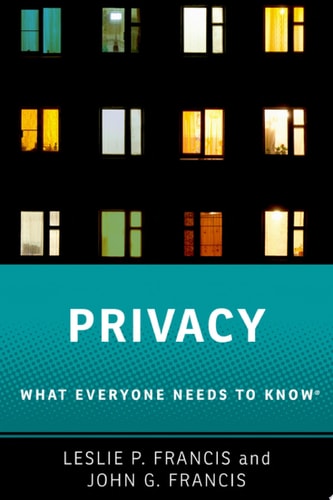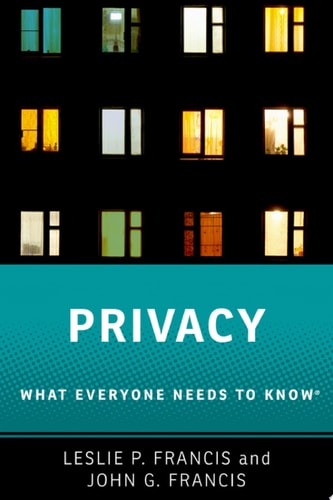
Privacy: What Everyone Needs to Know
0
0
As an Amazon Associate and affiliate partner, Menrva Books earns from qualifying purchases. Learn more
Author Description
We live more and more of our lives online; we rely on the internet as we work, correspond with friends and loved ones, and go through a multitude of mundane activities like paying bills, streaming videos, reading the news, and listening to music. Without thinking twice, we operate with the understanding that the data that traces these activities will not be abused now or in the future. There is an abstract idea of privacy that we invoke, and, concrete rules about our privacy that we can point to if we are pressed. Nonetheless, too often we are uneasily reminded that our privacy is not invulnerable-the data tracks we leave through our health information, the internet and social media, financial and credit information, personal relationships, and public lives make us continuously prey to identity theft, hacking, and even government surveillance.A great deal is at stake for individuals, groups, and societies if privacy is misunderstood, misdirected, or misused. Popular understanding of privacy doesn't match the heat the concept generates. With a host of cultural differences as to how privacy is understood globally and in different religions, and with ceaseless technological advancements, it is an increasingly complex topic. In this clear and accessible book, Leslie and John G. Francis guide us to an understanding of what privacy can mean and why it is so important. Drawing upon their extensive joint expertise in law, philosophy, political science, regulatory policy, and bioethics, they parse the consequences of the forfeiture, however great or small, of one's privacy.
Menrva's Summary
THE THESIS
This book investigates the evolving definition of privacy and the societal consequences of its erosion in an increasingly digitized world. The authors, Leslie P. Francis and John G. Francis, leverage their interdisciplinary expertise in law, philosophy, and bioethics to examine how technological advancements and shifting cultural norms challenge traditional concepts of personal data protection. They argue that a robust understanding of privacy is necessary to mitigate risks such as identity theft, surveillance, and the misuse of personal information.
THE SCOPE MAP
What You Will Find
- Analysis of privacy across various sectors including health, finance, and social media
- Examination of global and religious variations in the conceptualization of privacy
- Discussion of the legal and regulatory frameworks governing data usage
Scope Limits
- The text does not provide a technical manual for individual cybersecurity or data encryption
- It does not offer a comprehensive history of surveillance technology
THE AUTHORITY PERSPECTIVE
Experts recognize this work as a highly accessible entry point for understanding the complex intersection of law and digital ethics. Readers frequently note that the authors successfully synthesize dense academic concepts into a clear, coherent framework for a general audience.
Page Count:
352
Publication Date:
2017-07-03
Publisher:
Oxford University Press
ISBN-10:
0190612258
ISBN-13:
9780190612252
Philosophy
Non-Fiction
Law
Privacy
United States
Bioethics
Technology