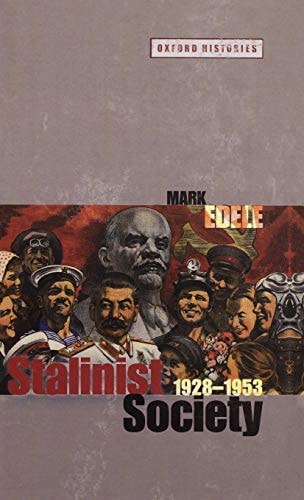
Stalinist Society 1928-1953
0
0
As an Amazon Associate and affiliate partner, Menrva Books earns from qualifying purchases. Learn more
Author Description
Stalinist Society offers a fresh analytical overview of the complex social formation ruled over by Stalin and his henchmen from the late 1920s to the early 1950s. Drawing on declassified archival materials, interviews with former Soviet citizens, old and new memoirs, and personal diaries, as well as the best of sixty years of scholarship, this book offers a non-reductionist account of social upheaval and social cohesion in a society marred by violence. Combining the perspectives from above and from below, the book integrates recent writing on everyday life, culture and entertainment, ideology and politics, terror and welfare, consumption and economics. Utilizing the latest archival research on the evolution of Soviet society during and after World War II, this study also integrates the entire history of Stalinism from the late 1920s to the dictator's death in 1953. Breaking radically with current scholarly consensus, Mark Edele shows that it was not ideology, terror, or state control which held this society together, but the harsh realities of making a living in a chaotic economy which the rulers claimed to plan and control, but which in fact they could only manage haphazardly.
Menrva's Summary
THE THESIS
This book provides a comprehensive analysis of the social dynamics within Stalinist Russia from 1928 to 1953. Mark Edele, drawing on declassified archives, interviews, memoirs, and extensive scholarship, presents a non-reductionist view of Soviet society, exploring both its upheaval and cohesion amidst pervasive violence. The study integrates perspectives from both the ruling elite and ordinary citizens, examining everyday life, culture, ideology, terror, welfare, consumption, and economics. It challenges the prevailing scholarly consensus by arguing that the primary force holding Soviet society together was not ideology or terror, but the pragmatic struggle for survival in a poorly managed, chaotic economy.
THE SCOPE MAP
- Analysis of social upheaval and cohesion in Stalinist society (1928-1953).
- Integration of perspectives from rulers ('above') and citizens ('below').
- Examination of everyday life, culture, ideology, terror, welfare, consumption, and economics.
- Utilization of declassified archival materials, interviews, memoirs, and diaries.
- A challenge to the scholarly consensus on the primary factors holding Soviet society together.
- Coverage of the entire Stalinist period, including developments during and after World War II.
THE AUTHORITY PERSPECTIVE
This work is recognized for its fresh analytical overview of Stalinist society, utilizing a wide range of primary and secondary sources. It offers a nuanced account that moves beyond simplistic explanations of state control or ideology, focusing instead on the lived realities of economic survival. The book is noted for integrating recent scholarship on various facets of Soviet life and for its challenge to established academic consensus regarding the mechanisms of social cohesion.
Page Count:
384
Publication Date:
2011-02-17
Publisher:
OUP Oxford
ISBN-10:
0199236402
ISBN-13:
9780199236404
History
Non-Fiction
Political History
Social History
European History
Russian History
Community Tags
Similar Books