The Global Circulation of Chinese Materia Medica, 1700–1949
0
0
As an Amazon Associate and affiliate partner, Menrva Books earns from qualifying purchases. Learn more
Author Description
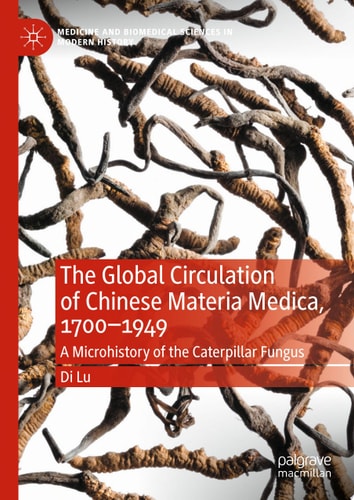
This book explores the dissemination of knowledge around Chinese medicinal substances from the eighteenth to twentieth centuries in a global context. The author presents a microhistory of the caterpillar fungus, a natural, medicinal substance initially used by Tibetans no later than the fifteenth century and later assimilated into Chinese materia medica from the eighteenth century onwards. Tracing the transmission of the caterpillar fungus from China to France, Britain, Russia and Japan, the book investigates the tensions that existed between prevailing Chinese knowledge and new European ideas about the caterpillar fungus. Emerging in eighteenth and nineteenth-century Europe, these ideas eventually reached communities of scientists, physicians and other intellectuals in Japan and China. Seeking to examine why the caterpillar fungus engaged the attention of so many scientific communities across the globe, the author offers a transnational perspective on the making of modern Europeannatural history and Chinese materia medica.
Menrva's Summary
THE THESIS
This book investigates the global circulation of knowledge surrounding Chinese medicinal substances from the eighteenth to the twentieth centuries. The author, Di Lu, examines the microhistory of the caterpillar fungus, a substance with Tibetan origins that was assimilated into Chinese materia medica from the eighteenth century. The book traces its transmission from China to Europe (France, Britain, Russia) and Japan, exploring the conflicts between traditional Chinese knowledge and emerging European scientific ideas. By analyzing why this fungus captured the attention of global scientific communities, the work offers a transnational perspective on the development of modern European natural history and Chinese materia medica.
THE SCOPE MAP
- The historical trajectory of Chinese medicinal substances in a global context, 1700-1949.
- A microhistory of the caterpillar fungus, from its Tibetan origins to its assimilation into Chinese materia medica.
- Analysis of the transmission of the caterpillar fungus from China to Europe (France, Britain, Russia) and Japan.
- Examination of the intellectual tensions between Chinese traditional knowledge and European scientific ideas regarding the caterpillar fungus.
- Insights into the making of modern European natural history and Chinese materia medica through a transnational lens.
- Case studies of scientific communities and intellectuals engaging with medicinal substances across different cultures.
THE AUTHORITY PERSPECTIVE
This scholarly work offers a detailed transnational history of Chinese medicinal substances, focusing on the caterpillar fungus as a case study. It is likely to be of interest to specialists in the history of science, medicine, and global history, particularly those focused on Sino-European intellectual exchange. The book's approach suggests a rigorous examination of primary sources and a nuanced exploration of how scientific knowledge was constructed and disseminated across different cultural contexts. The detailed tracing of a single substance across continents indicates a deep dive into the complexities of global scientific networks.
Page Count:
294
Publication Date:
2023-03-11
Publisher:
Springer Nature
ISBN-10:
303124723X
ISBN-13:
9783031247231
History
Non-Fiction
Science & Technology
Science
European History
Chinese History
Global History
MEDICAL History
Medicine